
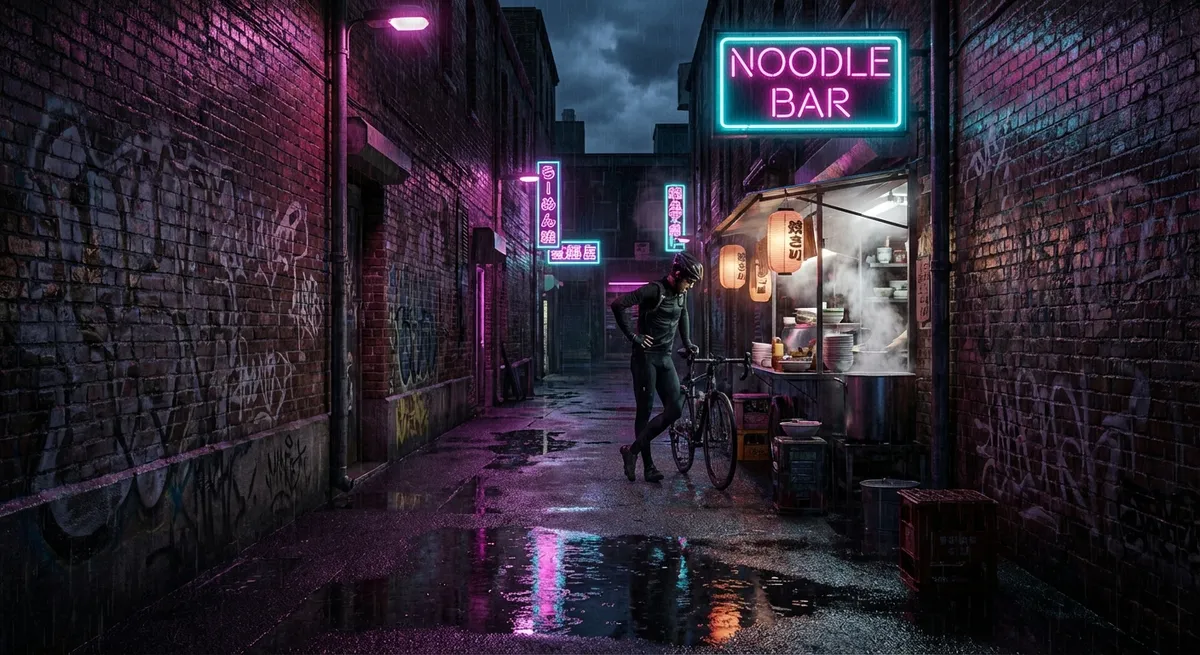
The best part of a city doesn’t always shout — it whispers. It’s the side street you only notice when you’re lost, the cafe that glows like a lantern at midnight, the rooftop you climb to “just see the view” and end up staying until sunrise. City escapes aren’t always about flying somewhere new; they’re about slipping sideways into another version of a place you thought you already knew. This is a story about five such slips — five city experiences that feel like tiny portals, opening into other lives, other worlds, and other ways of moving through your own.
1. The Secret Rhythm of the Early-Morning Market
Every major city has a place where the day truly begins — long before office towers light up or commuters crowd the trains. It might be a wholesale flower hall that smells like rain, a riverside fish market where the air is sharp and briny, or a maze of produce stalls where truck lights slice through the dark like stage spots.
You arrive when the sky is still the color of wet ink. The streets are quiet, but the market is already alive, pulsing like a hidden heart. Pallets slam down. Knives tap against cutting boards. Vendors call prices with the urgency of auctioneers. It’s chaotic, but not for show; this isn’t the city pretending to be rustic. This is its supply line, its bloodstream.
You wander through it, half invisible. No one is selling to tourists yet. People are selling to restaurant owners, corner grocers, elderly neighbors in worn sandals. You see the ingredients of the city’s meals before they become plated art. You start to understand why that soup tasted like it did last night, why that bakery’s bread is always gone by noon.
For a city escape, an early market visit is time travel: you walk into the backstage of a day that hasn’t happened yet. Bring curiosity, respect, and small bills. Buy something simple — a handful of berries, a hot dumpling, fresh bread still crackling — and eat it standing up, while forklifts whine and the sun edges over warehouse roofs. When you step back into the “normal” city later, coffee in hand, everyone else will feel like they’re late to something you’ve already lived.
Tip: Major cities often list their wholesale or public markets on official tourism or municipal websites; check opening hours carefully — some start as early as 3–4 a.m. and close by mid-morning.
2. Rooftop Vantage Points and the Art of Feeling Small
Every city looks different from above. At street level, you are absorbed into it — one more pedestrian, one more face. From a rooftop, you become a spectator to the city’s own theater: windows flickering on one by one, trains tracing bright lines across dark water, headlights threading through the grid.
Find a legal rooftop — an observation deck, a public terrace, a library or museum with an accessible upper floor. Skip the peak sunset surge if you can and aim for the blue hour, that soft, in-between time when daytime’s edges are still visible but the night is starting to take the stage. The city looks truer in that half-light; you can see its bones and its electricity at once.
Up here, familiar landmarks reassemble into something new. A neighborhood you’ve walked through a hundred times becomes a miniature model town. You spot a park you’ve never visited, a church steeple tucked between bank towers, a tiny rooftop garden you can’t help inventing stories about. Someone tends those plants. Someone reads a book in that folding chair. Someone, below you, is having the most important conversation of their life in a cafe you can only see as a sliver of warmth.
This is the quiet gift of rooftops: they don’t just give you a better view; they give you perspective. The stress that felt enormous on the sidewalk feels different when framed by 360 degrees of light and glass and sky. You’re still part of the story, but no longer its entire plot.
Tip: Many cities now have timed-entry systems and off-peak discounts for observation decks; early morning and late evening slots often have fewer crowds and more dramatic light.
3. Riding the Last Train Just to See Who’s Still Awake
There’s a special kind of intimacy in public transit at the edge of the day. The last train, the nearly empty tram, the late bus looping through side streets — they carry a different kind of traveler: dishwashers heading home with damp sleeves, nurses with tired eyes, teenagers with smudged eyeliner and shared earbuds, night-shift workers counting hours until sleep.
Buy a ticket not as a commuter but as an observer, with no destination more concrete than “back to where I started.” You sit by the window as the city sheds its gloss. Neon reflections smear across puddles. Corner stores roll down their metal shutters. A lone cyclist in a reflective jacket glides past like a ghost on a mission.
Inside the carriage, you piece together fragments of lives. A couple argues softly in a language you don’t understand. A man with paint-splattered boots dozes, head against the glass. A group of friends rehash the night — who said what, who almost fell, who shouldn’t text their ex. You’re not eavesdropping so much as witnessing: this is the city when no one is trying to impress anyone else.
Riding transit purely for the journey is a small rebellion against efficiency. There’s no “best route” because the wandering is the point. You trace unfamiliar lines on the map, get off one stop early on impulse, let yourself be curious about the neighborhoods that don’t appear in guidebooks. When you finally return to your hotel or home, you’ve collected something that doesn’t fit into a souvenir bag: a feeling for the city’s pulse after its public performance is over.
Tip: Always check transit schedules to avoid getting stranded at a closed station. In unfamiliar cities, stick to official lines and well-lit stops, and keep your belongings close.
4. The Museum After Dark and the Stories Hiding in the Corners
During the day, museums can feel like polite marathons — hordes of visitors, audio guides murmuring in a dozen languages, security guards scanning crowds instead of paintings. But many cities now offer extended or after-hours openings on certain evenings, and that’s when the spell really settles in.
You enter just before closing time or for a special late session, and suddenly the great halls echo less. Footsteps soften. The gift shop shutters half-close. You find yourself almost alone with pieces that usually command a crowd. A sculpture that was once just a quick photo-op becomes a presence in the room, shadows growing longer across polished floors. The guard, less harried now, might share a favorite detail — the brushstroke no one notices, the hidden signature, the crack in the marble that changed how it had to be displayed.
In smaller rooms, the city’s own history feels fresher at night. Old maps become ghost stories, showing rivers that no longer exist, districts renamed, borders redrawn. Portraits of long-gone citizens look strangely familiar; that woman in a 19th-century gown has your friend’s skeptical tilt of the head. You start to see the city not as a fixed place but as a living edit — constantly rewritten, layered, erased, and written again.
The museum, at this hour, is less a checklist of “must-see” works and more an intimate conversation. You pick just a few pieces and give them your full attention. You sit on a bench for longer than feels efficient. You let the city tell you who it used to be, and in the quiet, you can almost hear who it might become next.
Tip: Check museum websites for “late nights,” “extended hours,” or “special evening events.” These sessions often feature live music, talks, or smaller crowds that transform the entire atmosphere.
5. Getting Lost on Purpose in a Single Neighborhood
So much city travel is a race: hit this landmark, cross that bridge, check off this district before the light fades. The paradox is that you sometimes see more by deciding to see less — by picking one small neighborhood and giving it your full, wandering attention.
Choose an area not because it appears at the top of search results, but because someone local mentioned it, or because you glimpsed it from a taxi and thought, “What’s that?” Start with a single anchor — a cafe, a subway station, a small park — and set a loose rule: no maps for one hour, or always turn left at the next intersection, or follow only the streets that have trees.
You begin to notice the city’s handwriting here: the way people decorate balconies, the color of laundry on lines, the smells from open windows at dinnertime. A barbershop packed on a Tuesday afternoon. A tiny stationery store crammed with notebooks and stamps. A corner grocery with fruits you can’t quite name. None of it is on a “Top Attractions” list, and that’s exactly the point.
Eventually, your meandering delivers you to a place that invites you to stop — a bakery where the last pastries are cooling, a small bar where the bartender looks genuinely surprised to see a stranger, a bench with a perfect view of nothing in particular. You sit there, and for a moment, you’re not visiting the city; you’re simply in it.
This kind of city escape doesn’t demand you “discover” anything new. It just asks you to be porous: to let the ordinary details of another place seep in until they change you a little. When you go home, what you remember isn’t just the cathedral or the skyline. It’s the exact angle of light on that side street, the dog that trotted past like it owned the block, the way the air smelled like bread and rain and possibility.
Tip: City tourism boards and local blogs sometimes highlight lesser-known districts, but some of the best wandering happens when you use a paper map, zoomed out, and pick a place where your eyes don’t automatically land.
Conclusion
City escapes don’t always ask you to go far. Sometimes they just invite you to shift the hour, the height, the route, the pace. Wake up with the markets, rise above the streets, ride with the night shift, linger with old stories after dark, or let one small neighborhood swallow your plans for an afternoon. The city you think you know is always carrying a secret version of itself — quieter, stranger, more honest, waiting just around the corner you never turned.
The next time you find yourself in a city — old favorite or brand-new love — experiment with just one of these detours. Skip the obvious shortcut, ignore the familiar exit, and see where the long way around leads. That might be where the real story starts.
Sources
- UN World Tourism Organization – Tourism and Cities – Overview of how urban spaces are evolving for travelers and residents
- National Geographic – How to See a City Like a Local – Practical insights on slower, more immersive ways to experience cities
- BBC Travel – The Joy of Getting Lost – Explores why wandering without a fixed plan can deepen city travel
- Smithsonian Magazine – Museums After Dark – Discusses how nighttime museum hours change the visitor experience
- Transport for London – Night Tube and Night Overground – Example of major city night transit services and guidance for late-night riders