
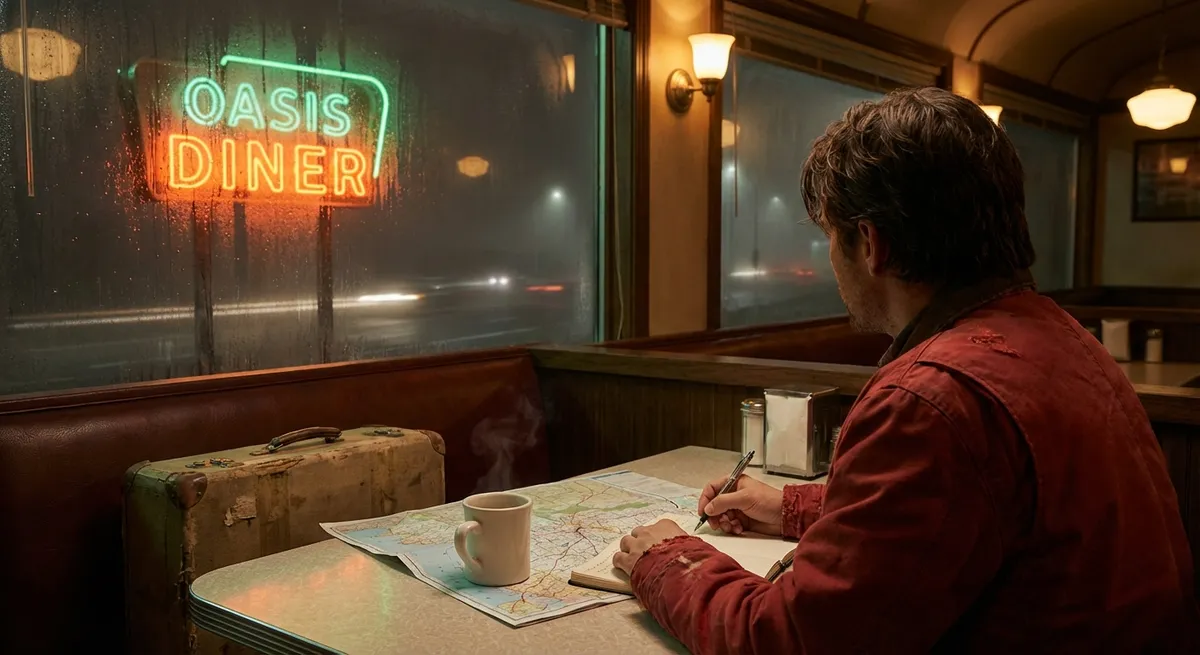
Some trips are booked with spreadsheets and color‑coded tabs. Others happen because your Wi‑Fi drops in a foreign café and you look up long enough to notice the world outside the window. This is a story about the second kind—five travel moments where things didn’t go to plan, and that’s exactly why they were unforgettable.
These are not bucket‑list bragging rights or “do it for the ’gram” itineraries. They’re the messy, vivid, can‑you-believe-that-just-happened stories that make you want to grab your passport, turn off your email, and see what waits on the other side of “why not?”
1. Missing the Train to Florence and Finding a Hilltop Village Instead
The day was supposed to be simple: Rome to Florence, espresso in hand, art and architecture on the afternoon schedule. Instead, the espresso took too long, the ticket kiosk glitched, and you watched your train slide out of Termini station without you—right when your perfectly planned itinerary slipped through your fingers.
The next regional train north didn’t reach Florence. It stopped short, in a small town whose name you had to check twice on the departures board: Orvieto. With nothing to lose, you got off.
A short funicular ride up the bluff, and the world changed. Florence’s crowds were swapped for narrow stone lanes where grandmothers leaned out of second‑floor windows, chatting across alleyways. You wandered past a butcher arranging cuts of meat in his window, listened to church bells echo off volcanic rock, and followed the scent of garlic and tomatoes into a trattoria with five tables and no English menu.
Lunch became an hour, then two. You ordered the house wine because it was easier than decoding the options, and the owner—who turned out to be the cook’s brother—insisted you try his favorite dish, umbrichelli al tartufo, thick hand‑rolled pasta tangled up with local truffles. On your way out, you followed a hand-painted sign to a viewpoint and found yourself at the cliff’s edge, looking down on a patchwork of vineyards and olive groves rippling to the horizon.
Florence would still be there next time. But this tiny, unplanned detour, born from a missed train and mild annoyance, felt like stepping into a postcard you didn't know you’d been saving.
Takeaway: Leave intentional gaps in your schedule. Book your anchor stops, but give at least one day to chance—no reservations, no hard deadlines, just curiosity and a willingness to get off one stop early.
2. The Night a Monsoon Turned a Bangkok Alley into a Street Kitchen
In Bangkok, the humidity presses on you like a second shirt. By late afternoon, clouds gather over the alleys and overpasses, and people start glancing up with that silent local calculation: rain now or rain later?
You’d just ducked into a side alley off Sukhumvit, chasing the smell of charcoal and fish sauce, when the sky opened. Not polite raindrops—monsoon rain, hard enough to bounce off the pavement. Neon signs blurred; motorbikes vanished into silver curtains.
The vendor whose cart you were about to order from—an older woman in a faded pink apron—snapped into action. Plastic tarps unfurled, stools scraped together under the narrow overhang of a building, and in minutes, what had been a small patch of sidewalk became a crowded, improvised dining room. Office workers, tourists, delivery riders, and a stray cat all tucked themselves under shelter and into the same space.
You found yourself shoulder to shoulder with a stranger from Seoul on one side and a Bangkok university student on the other. The vendor, unfazed by the weather, ladled out tom yum from a simmering silver pot, tossing herbs and chilies with muscle-memory efficiency. Steam fogged your glasses as you leaned over your bowl. Lime hit your tongue first, then chili, then the round, comforting warmth of lemongrass and galangal. Outside the tarp, the rain drummed like a thousand fingertips.
Nobody was in a rush. You couldn’t walk anywhere without getting soaked, so the universe gave you a forced timeout—with soup. The student next to you recommended a late‑night market across the river, and the Seoul traveler scribbled down the name of a café in Hongdae if you ever made it to South Korea. By the time the rain thinned to a drizzle, you’d collected three new recommendations, a local slang phrase, and an invitation to a rooftop bar you’d never heard of.
Takeaway: Don’t run from the weather; lean into it. Some of the best travel memories are born when you’re “stuck”—on a rainy street, under a tarp, or in a crowded station—with nothing to do but share space, food, and conversation with strangers.
3. Learning to Breathe Again on a Solo Train Ride Across Portugal
You booked the ticket because it was cheaper than flying and vaguely romantic: Lisbon to Porto by train, three hours of Atlantic‑side landscapes and a snack car. It had been a tough year—too many late nights, the constant static of group chats, the low hum of burnout you pretended not to hear.
Onboard, the scenery changed in slices: graffiti‑lined suburbs, then cork trees and small towns with red‑tiled roofs, then wide, open fields. You slid your phone into airplane mode—not because you had to, but because you wanted to—and watched the carriage windows turn into a moving movie screen.
Somewhere north of Coimbra, the light slanted in gold. A conductor passed through the aisle with the gentle authority of someone who’d been doing this route for decades. An older couple across from you shared grapes and a crusty paper bag of pastries, insisting you take one. You did—and the flaky sugar of the pastel de nata came with a smile and the universal language of “just try it, you’ll like it.”
With no Wi‑Fi and no tasks to complete, your brain finally did something radical: it wandered. You caught yourself imagining staying longer, picking up a bit of Portuguese, maybe taking the slow train even farther next time. You noticed the way the villages clustered around church spires, the geometry of grapevines tracing the hills, the way the train rocked you into a looser version of yourself.
By the time you rolled into Porto’s São Bento station, with its blue‑and‑white tile murals and the clatter echoes of arrivals and departures, you felt oddly rested—less like you’d just traveled and more like you’d stolen three hours back from a year that had taken too much.
Takeaway: When possible, trade one flight for one slow train. The journey becomes part of your rest, not just the price of admission to a new city. Use that time as a boundary—no scrolling, no catching up, just looking out the window and letting your mind drift.
4. Getting Lost in a Moroccan Medina and Letting the City Lead
Maps don’t prepare you for a Moroccan medina. On your screen, the old city of Fez looked like a tight swirl of lanes—complex, but manageable. On the ground, it was something else entirely: a living maze of textile stalls, spice pyramids, tiny workshops, and doorways that looked like portals to other worlds.
You were told “don’t get lost,” so of course, that’s exactly what happened.
It started with a left turn for a better view of a mosaic fountain. Then a right turn to avoid a man maneuvering a cart piled high with oranges. Then an absentminded detour down a quiet lane where cats napped in doorways and children chased a deflated soccer ball. Your map app spun uselessly, confused by the packed streets and overhangs that blocked satellite views.
At first, your heartbeat quickened. Where were you, exactly? Every lane looked familiar and unfamiliar at the same time. Then you remembered a local’s advice from the night before: “In the medina, you don’t find places. Places find you.”
So you stopped trying to fight the maze.
You followed your senses instead. The strong, earthy smell of leather drew you to the tanneries, where vats of dye turned the world into a painter’s palette. The bright clatter of metal led you to a lane of copper workers, sparks jumping as they hammered bowls into shape. A bakery’s heat spilled into the alley, and you realized families brought their dough here to be baked in the communal oven. One baker, amused by your wide eyes, handed you a piece of fresh khobz—still hot, impossibly soft.
Eventually, a teenager noticed your hesitant glances at the street signs and offered to guide you back to the main gate. Along the way, he pointed out the smallest alley in the medina (you had to turn sideways to squeeze through), his primary school, and a rooftop where his cousin worked in a café. He earned a tip, yes, but he also gained a momentary audience for a place he clearly loved.
You left Fez understanding that not every city is meant to be “conquered” by checklists. Some are meant to be wandered until your edges blur into theirs.
Takeaway: In destinations known for their old quarters and markets, set aside time to walk without a target. Stay aware and safe, but allow yourself to drift. Often, the most memorable stories live in the wrong turns.
5. Chasing Silence Under a Thousand Stars in the Australian Outback
You didn’t realize how loud your life had become until you were dropped in the middle of almost nothing.
Hours from the nearest city in Australia’s Red Centre, the landscape stretched out in ochre and rust, broken only by strange, resilient plants and the occasional kangaroo frozen in mid‑chew as your 4WD rumbled past. The tour guide cut the engine at camp and, for the first time in a long time, the noise stopped.
No sirens. No traffic. No phones pinging with “just circling back” messages.
At sunset, Uluru glowed and then slowly dimmed, the rock shifting through colors like someone turning down the saturation on a massive, ancient screen. The air cooled fast, heat bleeding out of the ground until you needed a jacket. As darkness fell, the guide led a short walk away from camp, far from any man‑made lights, and told everyone to lie down on their backs.
The sky went from black to infinite.
Stars appeared in layers: bright, then brighter, then a faint dust of light where the Milky Way stretched overhead. Constellations were upside down from what you were used to—Orion tilted differently, the Southern Cross more vivid than any photo. Satellites traced silent lines overhead. Someone nearby whispered, then stopped, as if words might shatter the moment.
You realized that in your day‑to‑day life, “quiet” still came with a soundtrack—a fan, a neighbor’s TV, the distant low of traffic. This was different. The Outback’s silence had weight. It made you acutely aware of your own breath, your own smallness, and, paradoxically, your place in something much bigger.
That night, you fell asleep in a swag under the open sky, red dust still in the creases of your shoes, the faint scent of campfire in your hair. In the morning, as the sun edged back over the horizon and the rock blushed awake again, you made a quiet decision: once a year, you’d seek a place where the stars were the main event.
Takeaway: Build trips around a feeling, not just a sight. Maybe you want stillness, or awe, or connection. Wild places—deserts, mountains, remote coasts—have a way of delivering emotions you didn’t know you needed.
Conclusion
Travel isn’t just about crossing borders; it’s about crossing thresholds—of comfort, of routine, of who you think you are when nobody knows your name. A missed train can become a hilltop lunch with a view you didn’t expect. A monsoon can turn strangers into temporary family under a awning. A slow train, a maze‑like medina, a night under foreign stars—each moment shifts something inside you, quietly, permanently.
You don’t have to quit your job or sell all your belongings to feel it. You just have to leave a little blank space in your plans. That’s where the stories slip in.
When you’re ready, pack your curiosity first. The rest tends to find you along the way.
Sources
- Visit Portugal – Trains and Rail Travel – Official overview of train routes and experiences across Portugal
- Tourism Australia – Uluru and the Red Centre – Background on Uluru, the Outback, and responsible travel in the region
- Tourism Authority of Thailand – Bangkok Street Food Culture – Insight into Bangkok’s street food scene and local eating customs
- Moroccan National Tourist Office – Fez Medina – Information on Fez’s historic medina, culture, and visitor guidance
- UNESCO – Historic Centre of Florence – Context on Florence’s cultural heritage and why travelers are drawn to the city