
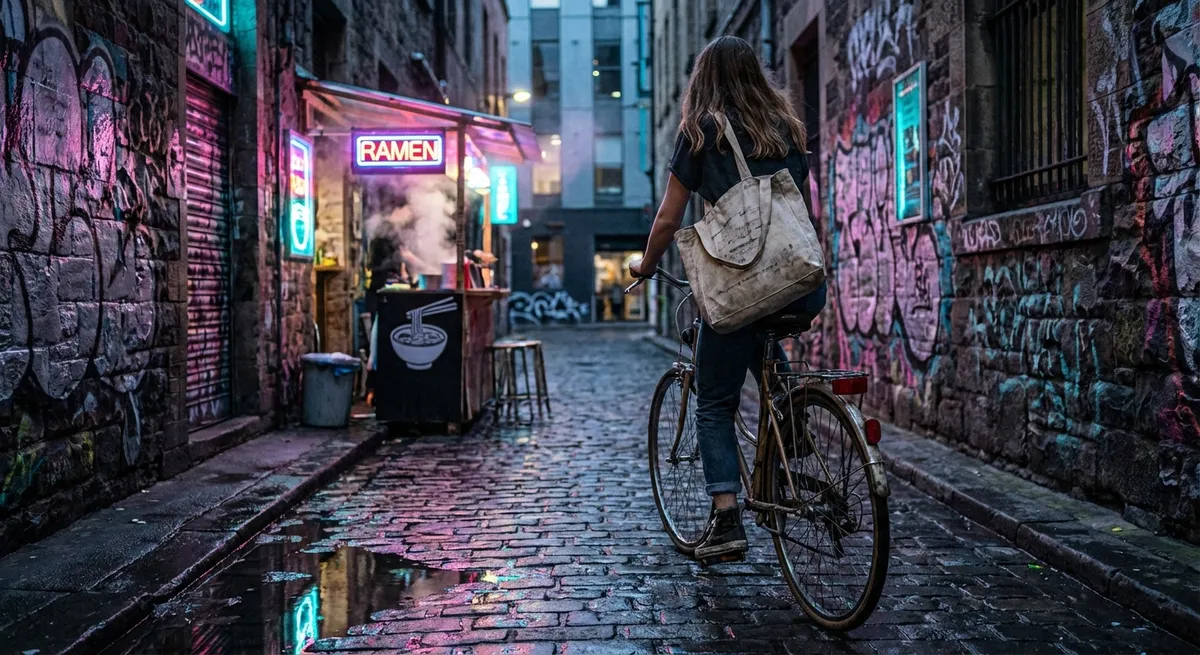
Some getaways take a plane ticket and a passport stamp. Others begin the moment you step off the subway and decide that, just for today, this familiar city isn’t allowed to be ordinary. City escapes don’t always mean leaving town; sometimes they mean slipping out of your routine and into a version of the city that tourists barely notice and locals often forget.
Let’s wander through five kinds of urban mini-adventures—part story, part guide—that can turn a random weekend into a memory you’ll be replaying long after your phone battery dies.
Dawn on the Rooftops: When the City Wakes Up Slowly
It starts before the coffee shops unlock their doors—when the sky is still a soft bruise and the city feels like it’s whispering instead of shouting. If you’ve only ever met a city after 9 a.m., you’re missing one of its best moods.
Picture this: your alarm goes off when the streetlights are still on. You grab a light jacket, a thermos of coffee, and head toward a viewpoint that locals love but Instagram hasn’t ruined yet—a public rooftop garden, a riverside embankment, the top level of a parking structure with an unobstructed skyline. The air tastes cleaner, the traffic is just a low murmur, and even the skyscrapers look bashful in the pastel light.
These early hours are perfect for travelers who want the city without the crowds. Photographers swear by “blue hour” and sunrise for the way buildings glow in soft light, but you don’t need a fancy camera to feel the magic. Bring a notebook and sketch, journal, or map out your day while the city stretches awake beneath you.
To find these hidden vantage points, search for public observation decks, free rooftop parks, or elevated promenades (like New York’s High Line or Seoul’s Seoullo 7017) in your destination. Many cities now build walkable, elevated spaces that quietly become local favorites. Get there before the yoga mats and selfie sticks arrive, and you’ll feel like you rented the whole skyline for yourself.
Market Labyrinths and Street Stories: Eating Your Way Into the City’s Soul
Every city has a place where its heartbeat is loudest: the food markets. It’s where night-shift workers grab breakfast, grandmothers bargain over herbs, and stall owners yell over the hiss of grills and the clatter of metal pans. If you want to understand a city fast, skip the fancy restaurant on night one and go straight to the market.
Imagine wandering into a covered market or sprawling bazaar, eyes still adjusting from outside daylight. The air is thick with the smell of spices, grilled meat, fresh bread, and something you can’t quite name but know you want to taste. A vendor hands you a tiny sample—maybe a sliver of cheese, a spoonful of curry, a bite of something wrapped in dough. You say yes, unsure of what it is, and that yes becomes the beginning of a day-long flavor story.
Markets are more than just food courts; they’re living museums of migration and memory. The Venezuelan arepa stand beside the decades-old fishmonger. The third-generation baker selling recipes perfected long before smartphones. The food is delicious, but it also carries the stories of who came here, who stayed, and who made this city home.
For your own market micro-adventure:
- Go hungry, go early, and go open-minded. Breakfast hours are often when locals shop and eat.
- Ask one question at every stall. “What do you recommend?” or “What’s your favorite thing to cook?” People light up when you show interest in their craft.
- Follow the lines. A long queue is often the city’s unofficial seal of approval.
- Let one dish guide your day. Try something new, then ask where else in the city you should go to taste a different version of it.
By the time you leave, pockets full of crumbs and phone full of blurry food photos, you’ll feel like you’ve been given a backstage pass to the city’s kitchen.
Riverlines and Rail Tracks: Letting the Transit Be the Tour
Most travelers treat public transit as a chore—just the thing that gets them from the airport to the hotel. But some of the best city escapes happen when you step aboard a tram, a ferry, or a train with no destination in mind except “let’s see what happens.”
Picture: you hop on a vintage tram that rattles past old theaters and neighborhood bakeries, or a riverside ferry that glides between glass towers and rusted warehouses now turned art studios. You sit near the window, headphones in or out, and let the city scroll by like a live documentary. Every stop is a story you could get off and walk into.
Many cities—Amsterdam, Istanbul, Hong Kong, Lisbon, Chicago, Sydney—have transit routes that practically double as budget-friendly sightseeing tours. River ferries pass under iconic bridges and alongside historic districts; hillside funiculars reveal secret staircases and pocket-sized parks; metro lines pop above ground just long enough to show you a sudden view you weren’t expecting.
To turn transit into a city escape:
- Pick one line that locals love. Search for “best bus route,” “scenic tram,” or “river ferry ride” plus your city’s name.
- Ride it end-to-end. No rush, no itinerary, just curiosity.
- Hop off where the mood strikes. A street mural that catches your eye, a café on a corner, a park full of people playing pickup soccer—those are invitations.
- Ride during golden hour. Late afternoon light makes even office buildings look cinematic.
By the end, you’ll feel like you’ve traced the city’s arteries, not just stuck to its postcard-ready heart.
Side-Street Galleries and After-Hours Museums: Art When the City Goes Quiet
The big museum with world-famous masterpieces is on everyone’s list. But there’s another kind of city escape that feels more like stumbling into someone’s dream: side-street galleries, tiny artist-run spaces, and museums visited at odd, quiet hours.
Imagine walking down a narrow side street, following a sandwich board sign that simply says “EXHIBITION →.” Up a flight of creaky stairs, you find a single room flooded with afternoon light, walls covered in local artists’ work, prices written in pencil on scraps of paper. No glass barriers. No selfie mobs. Just you, the creak of the floorboards, and the artist themselves, sitting at a desk by the window.
Art districts in cities—from Berlin’s former factory zones to Los Angeles’ converted warehouses—often host monthly or seasonal “open studio” nights, when dozens of spaces throw their doors wide. You wander from building to building, drink in hand, talking to sculptors, photographers, painters, and designers about what it’s like to live and create here. Suddenly, the city isn’t just a place you visited—it’s a place where dreams are being built in real time.
And then there are the big museums…visited differently. Many major museums offer late-night openings with live music, smaller crowds, and a relaxed vibe that turns “looking at art” into “hanging out in a palace after hours.” The same painting you’d shrug at at noon suddenly feels electric when the regular day’s noise has died down.
To make an art-fueled city escape:
- Search for “gallery walk,” “art night,” or “open studios” in your destination.
- Check museum calendars for late-night events or free-entry evenings.
- Talk to at least one artist or curator. Ask what the city means to them; their answer will change how you see every street.
- Follow the flyers. Posters and postcards on gallery counters are treasure maps to more hidden spaces.
You’ll leave with more than just photos—you’ll carry the city’s creative pulse with you.
Parks After Dark and City Soundtracks: Reclaiming the Night Gently
The city at night can be loud, neon, and fast—but it can also be soft, dusky, and oddly tender. Not every night out needs to be clubs and cocktails; some of the best city escapes happen when you slow down and let the evening wrap around you.
Picture this: it’s just after sunset, and instead of heading straight back to your hotel, you detour into a large urban park—a place that’s busy with joggers and dog-walkers during the day but takes on a different kind of magic at dusk. Streetlamps flicker on. The last of the kids’ laughter fades from the playground. Somewhere, a busker starts playing a quiet tune that drifts across the lawn.
Many cities now host outdoor cinemas, open-air concerts, and night markets in their parks and plazas. You might find a temporary stage set up for a jazz quartet, a cluster of food trucks glowing against the dark, or a crowd lying on blankets watching an old movie projected onto a brick wall. You become part of a temporary village built just for tonight.
If formal events aren’t your thing, build your own soundtrack escape. Before your trip, make a playlist inspired by the city’s music scene—local bands, iconic singers, underground producers. Tonight, you walk its streets with those sounds in your ears. That alley takes on the mood of a bass line, that bridge matches the piano, that cafe window light feels like a chorus.
To savor the city after dark—without burning out:
- Research “outdoor concerts,” “night markets,” or “open-air cinema” in your destination.
- Stick to well-lit, well-frequented areas and main paths—comfort lets you relax and notice details.
- Bring a light layer and something to sit on. Parks can get cooler and damper than streets at night.
- Stay observant and respectful. You’re stepping into locals’ evening rituals; be a quiet guest, not the main character.
The reward is a version of the city that feels less like a destination and more like a shared living room—soft, lived-in, and beautifully human.
Conclusion
Urban escapes don’t always require check-in counters, security lines, and a new stamp in your passport. Sometimes, they’re as close as the rooftop you’ve never visited, the tram line you’ve never ridden to the end, the gallery postcard you’ve always walked past.
At their core, these city micro-adventures are an invitation: to show up earlier, stay out later, take the slower path, talk to strangers, and let curiosity set the itinerary. Whether you’re exploring a city for the first time or falling back in love with your own, the magic lives in the in-between moments—the quiet rooftops, noisy markets, rattling trams, hushed galleries, and parks glowing gently after dark.
The next time you feel that itch for escape, you don’t have to go far. Just step outside, pick a direction, and give the city permission to surprise you.
Sources
- UN World Tourism Organization – Urban tourism overview – Background on how cities are reshaping themselves for travelers and residents
- National Geographic – Why public markets are the heart of cities – Explores the cultural and social importance of city markets
- BBC Travel – Exploring cities by public transport – Discusses how transit can be an immersive way to experience urban life
- Museum of Modern Art (MoMA) – After-hours and late-night programs – Example of how major museums are reimagining evening visits
- Project for Public Spaces – Great public spaces and parks – Case studies on how parks, plazas, and markets create vibrant city experiences