
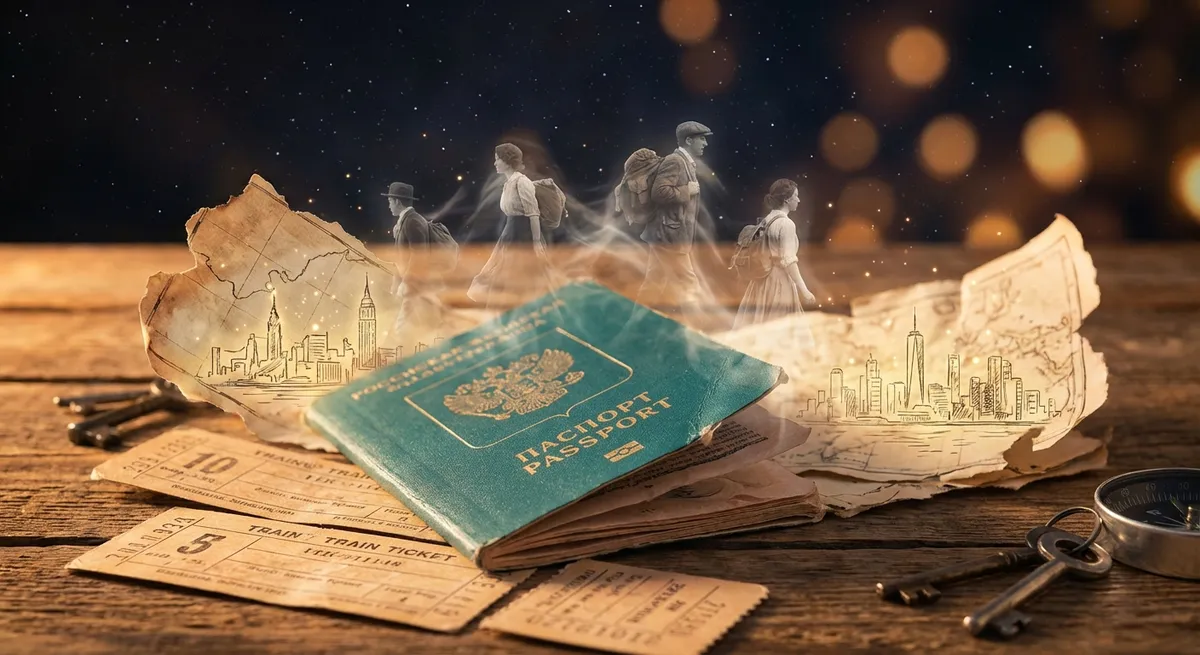
Some trips live in your camera roll. Others live in your bloodstream. The best journeys don’t just give you somewhere new to stand—they give you a new way to look at where you’ve already been.
These five travel stories aren’t about ticking off famous landmarks. They’re about misreading train signs, getting lost on purpose, and finding out who you are when your comfort zone is twenty time zones away. Pack lightly. We’re leaving.
Dawn on the Rooftops of Lisbon
The first sound was spoons against porcelain.
From the narrow balcony of a guesthouse in Lisbon’s Alfama district, the city looked unfinished—rooftops like scattered terracotta puzzle pieces, church towers barely awake, the Tagus River still wearing its blue-grey pajamas. Somewhere below, a radio whispered fado, that melancholic Portuguese music that sounds like homesickness with a rhythm.
I hadn’t meant to wake up this early. Jet lag had, rudely and efficiently, yanked me from sleep. But as I stepped outside, wrapped in a sweater and yesterday’s confusion, the city offered a soft apology: pastel sky, gulls tracing slow circles, bakery smoke drifting up like a promise.
There’s a specific kind of quiet in old cities at dawn. Not silence—never silence—but a patient, waiting hush. A tram bell chimed somewhere in the maze. A neighbor swept their doorway. A kettle screamed through an open window. Lisbon wasn’t performing yet. It was just existing.
I followed the smell of baking down steep, cracked staircases, discovering that “five minutes away” in Lisbon really means “fifty steps down, then twenty up, then spiral around a courtyard you’re sure is private but isn’t.” I ended at a tiny pastelaria where the display case glowed with still-warm pastéis de nata—the famous custard tarts with blistered tops and flaky, buttery shells.
The woman behind the counter dusted mine with cinnamon and powdered sugar. I ate it standing at the bar, sipping espresso so strong it should’ve come with a parental advisory, watching locals drift in: a construction worker, a grandmother in an ironed dress, a teenager scrolling through her phone. Dawn had vanished. Morning had clocked in.
The wanderlust here isn’t in the view—though Lisbon’s views are generous. It’s in the invitation: wake up before the city remembers you’re a visitor. Let the streets teach you their own schedule. If you can, give a dawn to every place you visit. It will feel like the city let you in on a secret it doesn’t post on Instagram.
Getting Lost (On Purpose) in a Korean Food Alley
The sign said “No English Menu.”
That’s how I knew it was the right place.
In a backstreet near a busy station in Seoul, neon lights fought each other for reflection in puddles left by an afternoon storm. Music bounced out of doorways, mixing K-pop hooks with clinking glasses and bursts of laughter. But it was the smell that led me: grilled meat, garlic, gochujang’s sweet heat, a little bit of charcoal, a lot of temptation.
Past the modern cafés and polished chains, the alley narrowed. Plastic stools. Metal chopsticks. Vent pipes snaking out from low ceilings. Handwritten signs in Hangul. One doorway was completely fogged with steam, the windows breathing in and out like a dragon.
Inside, a woman waved me over with a towel still in her hand. No menu, just a question: “Samgyeopsal?” Grilled pork belly. I nodded, not because I was sure, but because “yes” is a good default setting when you’re traveling and hungry.
Plates landed like punctuation: raw pork belly, kimchi, marinated onions, garlic cloves, pale green lettuces, a bubbling stew, sauces with no label but plenty of personality. She lit the table grill, the fat sizzled, and suddenly I was part of a choreography I didn’t know but everyone around me did.
The man at the next table noticed my hesitation with the lettuce wraps and launched into a friendly crash course, half in English, half in improvised sign language, entirely in hospitality. Wrap, stack, dip, eat in one bite. Drink a shot of soju. Repeat. He showed me how to cut the meat with scissors, how to tuck in raw garlic like a dare, how not to fear the red sauces.
Tip: in food alleys around the world—from Seoul to Mexico City to Marrakech—the best way to order is often to point discreetly at what someone else is eating and smile. Most cooks are proud, not annoyed. You’re not just getting a meal; you’re being inducted into a local ritual.
By the time I stepped back into the night, my hair smelled like smoke, my jacket like garlic, my brain like a scrapbook of new flavors. I could’ve eaten at a safe option with laminated English menus and photos numbered one to twenty. But the best travels happen where there’s just enough uncertainty to keep you awake and just enough kindness to keep you brave.
A Train Window in Switzerland and the Art of Slowing Down
On the platform in Lucerne, the departure board was surgical in its precision: 14:05. Not 2 p.m. Not “about two-ish.” The train glided in with the quiet arrogance of something that knows it’s exactly on time.
Inside, everything was tidy in that Swiss way where even the trash cans look like they have life goals. I found a window seat. The doors hissed shut. No grand announcement. Just motion.
Mountains rose as if someone had dragged the horizon closer with a finger. Lakes mirrored clouds with unsettling accuracy. Tiny villages leaned against hillsides, their church spires pointing politely skyward. Cows grazed in fields so green they looked edited.
And something unexpected happened: my brain, usually a restless tourist stamping through itineraries and to-do lists, sat down and stared out the window.
Modern travel tends to reward the collectors: of sights, of photos, of “must-sees.” But a long train ride through a quiet country is a subtle rebellion against that. You’re not stopping every ten minutes to chase another view. The views come to you. Your job is simply to receive them.
I watched as the scene shifted from postcard-perfect to almost mundane—industrial edges of towns, graffiti under bridges, schoolyards where kids kicked soccer balls against chain-link fences. Life doesn’t pause for scenic routes. It keeps folding itself around the tracks.
Tip: deliberately schedule one “wasted” journey on a trip—a train, bus, or ferry ride that exists only for the act of crossing distance. No famous sights at the end. No reservation to keep. Let it be an interval, not a means to an end. Bring a notebook instead of an agenda.
By the time the train slid into the final station, I hadn’t “done” anything. But something had been done to me. Slowness had flexed its muscles. Perspective had, quite literally, opened up. That’s the underestimated power of a window seat: it turns you from a planner into a witness.
A Storm, a Ferry, and the Courage to Change Plans in Greece
The sky over the Aegean went from Instagram blue to “we should talk about this” in ten minutes.
I was on the top deck of a ferry between Greek islands, sandal-strapped, camera-ready, sunscreened like an overcautious parent. The plan was airtight: arrive, check into the beachside pension, rent a scooter, chase sunsets. I had spreadsheets. Color-coded.
Then the wind shifted. Tourists scrambled for hats. The café workers started strapping things down with the speed of people who had seen this movie before. The water went from glass to crumpled tin foil.
Announcements crackled: arrival delayed. Port change. Harbor closed. The tidy itinerary on my phone became fictional literature.
Here’s something travel rarely advertises: a lot of it is surrender. To weather. To delays. To all the tiny and gigantic variables you cannot control, no matter how many tabs you have open in your browser.
When we finally docked—at an entirely different island than planned—the sunset was hidden behind bruised clouds. A line of equally bewildered passengers formed at the port’s only open kiosk. Hotels? Buses? Taxis? A woman behind the counter fielded questions like a goalie.
“Rooms?” I asked, laughing mostly to keep from swearing.
She shrugged in that Mediterranean way that’s half apology, half philosophy. “Something will be found.”
And it was, of course. Not the beachfront dream from the booking site, but a spare room in a family house up the hill. No view, but a backyard with a lemon tree. No infinity pool, but a crooked table where the owner’s mother laid out tomatoes that tasted like they had a life story.
We spent the night hearing the storm argue with the shutters and the family chat in low voices in the kitchen. The next morning, the island steamed in the sunshine as if nothing had happened. Our “ruined” plan had turned into a story we told with more love than any perfectly executed itinerary.
Tip: build at least one empty day or half-day into any trip. Call it “weather day” or “plan B day.” When (not if) forces beyond your control rewrite your script, you’ll have space to pivot without panic—and maybe follow an opportunity that didn’t exist in your original notes.
Sometimes the most important travel skill isn’t navigation or budgeting; it’s the willingness to say, “Okay, let’s see what happens now.”
A Silent Night Under Too Many Stars in the Chilean Desert
In the Atacama Desert of northern Chile, the night feels bigger than usual.
The town of San Pedro is small enough that you can walk its dusty streets end to end before your coffee cools. Adobe walls. Wooden doors. Signboards chalked in three languages. Tour vans advertising geysers, salt flats, flamingos. It’s charming by day.
But the desert’s main act starts after dark.
We drove out with a small group, our headlights eating dust, the town’s lights shrinking behind us. Then even the road seemed to give up, dissolving into a flat nothing. The guide killed the engine and, with it, every artificial sound.
The silence was not absence. It was presence. The kind that presses softly on your eardrums and makes your own heartbeat sound immodest.
When the guide first told us to look up, everyone did that polite tourist thing—“Oh wow, so many stars”—the kind of reaction you give to a view you think you’ve seen before. Then our eyes adjusted.
It wasn’t a sky full of stars. It was a star full of sky.
The Milky Way cut overhead like spilled sugar. Constellations I’d only seen as illustrations in childhood science books suddenly had depth, brightness, narrative. Satellites crawled silently. A meteor stitched a quick, arrogant line across the black.
There’s a specific kind of travel that doesn’t show you something new, but shows you your own smallness with uncomfortable clarity. High mountains do it. Open oceans do it. Deserts, especially under unpolluted skies, specialize in it.
Tip: if your destination has any access to dark-sky reserves, stargazing tours, or observatories, consider swapping one typical nightlife activity for a night under the universe. It’s a different kind of party—no dress code, very strict on perspective.
Standing there, neck aching, I realized how often trips are about adding experiences to our lives—more places, more meals, more shots for the feed. A night like that subtracts instead: ego, urgency, the illusion that you’re the center of anything. What’s left is a quiet kind of awe that redesigns your sense of scale.
On the drive back, nobody talked much. The town’s lights looked almost embarrassed trying to compete. Inside, though, it felt like all of us had been slightly rewired.
Conclusion
The stories that travel gives you are not souvenirs you can pack neatly between shirts. They’re more troublesome than that. They disturb your routines, whisper at you when you’re back at your desk, nudge you to look twice at your own neighborhood.
A dawn that belongs only to you in a foreign city. A meal ordered without a shared language. A train ride that teaches you to idle. A storm that rearranges your carefully crafted plans. A night sky that rearranges you.
You don’t have to go far to find moments like these. You just have to go willing: to wake up early, to step into the alley that feels a bit too local, to sit still on a train, to accept last-minute detours, to look up when everyone else is looking at a screen.
The world isn’t just waiting to be seen. It’s waiting to be felt. The next story might start with something as small as saying “yes” when your instincts whisper “this is new.”
Sources
- Visit Portugal – Official Tourism Website – Background on Lisbon’s neighborhoods, food culture, and dawn city experiences
- Korea Tourism Organization – Overview of traditional Korean food alleys, local dining customs, and etiquette
- Switzerland Tourism – Grand Train Tour – Information on scenic train journeys and slow travel routes in Switzerland
- Visit Greece – Hellenic Republic Ministry of Tourism – Official guidance on island ferries, weather considerations, and flexible trip planning
- European Southern Observatory – Atacama Facilities – Details on the Atacama Desert’s night skies, observatories, and dark-sky conditions