
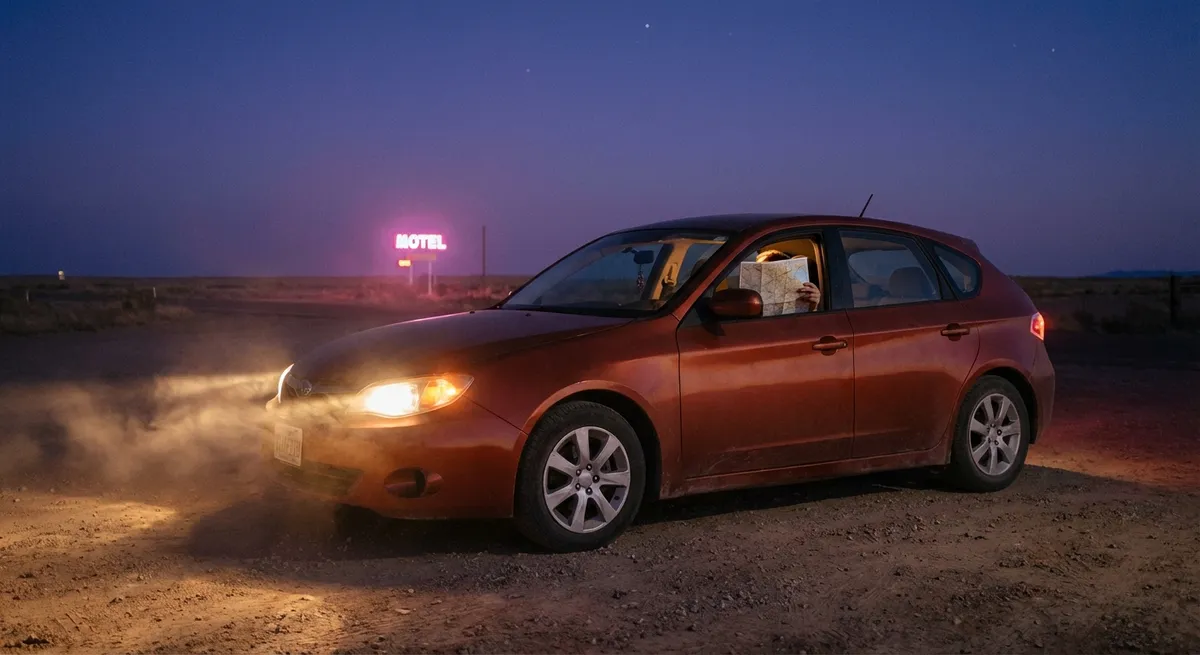
Some trips start with a flight confirmation and an itinerary spreadsheet. Road trips usually start with something smaller and far more dangerous: a feeling. The itch to see what’s beyond the next town. The curiosity about a dot on the map you’ve never heard of. The quiet need to sit with your thoughts while the world slides by at 65 mph.
This isn’t a list of “Top 10 Scenic Drives” or “Best Places to Take a Selfie with Your Car.” These are five road-trip stories, each with a different rhythm: a sunrise that rewires your idea of distance, a storm that forces strangers to become a temporary family, a coastline that keeps daring you to turn one more corner. Woven through each story are tips you can borrow for your own journey, whether you’re crossing a continent or just driving three hours to somewhere that feels like a different planet.
Buckle up. The map is optional; the story is not.
1. The Sunrise That Made 4 A.M. Worth It
The alarm went off in the dark, at that hour when even the night seems tired of being awake. You question every decision that led you here: why you packed the car the night before, why you said yes to watching a sunrise from a mountain pass, why you thought coffee in a thermos could replace sleep.
But twenty minutes into the drive, the highway empties into silence. The world is just you, the dashboard glow, and a thin line of silver on the horizon. The first trucks slide past, ghostly and quiet, and the radio becomes less important than the sound of tires on pavement.
Climbing into higher elevation, the color starts. Black turns to charcoal, charcoal to blue, and then, abruptly, the sky decides it’s done with subtlety. Light floods over peaks you couldn’t even see from the motel parking lot. The road snakes along a ridge, and every turn reveals another layer of mountains stacked like torn paper against a growing fire of pink and gold.
By the time you pull into the overlook, you’re not tired anymore. You’re awake in a way caffeine can’t explain. You wrap your hands around the thermos and realize nobody can really photograph this—the cold air in your lungs, the quiet between you and the friend in the passenger seat, the feeling that you arrived exactly when the world decided to reveal itself.
Road-trip tip from the sunrise drive:
Build at least one “ridiculous” early-morning drive into your trip. Not because you need more time on the road, but because the emptiness of the highway before dawn feels like you’ve borrowed the world before everyone else wakes up. Check sunrise times ahead of your trip, choose a viewpoint 30–60 minutes away, and arrive early enough to watch the sky change instead of racing the sun.
2. The Small Town That Wasn’t on the Plan (But Should Have Been)
The town wasn’t supposed to be a destination. It was just the place your fuel gauge forced you to acknowledge. One blinking light later, you follow a small sign off the main highway: an exit without a chain restaurant logo, just the name of a town you’ve never heard pronounced out loud.
The gas station is old enough that the pumps click and shudder. You go inside to prepay, and the clerk, who looks like he’s seen every version of this road since the 80s, mentions—almost casually—that you “just missed the pie.”
“The what?”
“The pie. At the diner down the road. They pull the last batch around 3. You can probably still get blueberry if you hurry.”
This is how detours happen. Two minutes later you’re walking into a diner with a cracked neon sign and a bell on the door that announces your arrival to a roomful of locals who glance up, assess you in half a second, and then return to their conversations.
You sit at the counter. The pie arrives: one slice of blueberry, still warm, with vanilla ice cream beginning to surrender at the edges. You learn that the owner’s grandmother started the recipe, that the town has a festival every summer, and that the closed building you passed on the way in used to be a movie theater where they showed all the blockbusters two months late.
The whole stop takes 45 minutes, but it shifts the shape of your day. Suddenly, the line between “destination” and “somewhere on the way” blurs. That town becomes part of your personal map forever: not just a name on a sign, but a place where you once had the perfect slice of pie on a Thursday afternoon.
Road-trip tip from the accidental town:
Give your route “permission to wander.” Build at least an extra hour or two into long driving days for pure improvisation. Stop in one town each day that you didn’t bookmark in advance. Seek out diners, bakeries, or local coffee shops instead of familiar chains. Ask one question that has nothing to do with directions—try, “If I had one hour in this town, what should I not miss?” and see where it leads you.
3. The Storm, the Motel, and the Strangers Who Became a Temporary Tribe
The sky turned the wrong color first. That greenish-gray that feels like a warning more than a weather pattern. You’re two hours from anywhere that feels solid on the map, and the radio shifts from music to alert tones. Flash flood. High winds. “If you can avoid travel…”
You can’t outrun it, so you do the only smart thing: you exit. The highway empties into a two-lane road, which empties into a main street with flickering lights and one weather-beaten motel that looks like it’s survived worse.
The rain hits like it’s been waiting all week. Within minutes, the parking lot turns into a shallow river. You stand under the motel’s awning with a handful of other refugees from the road: a couple in a rental car, a delivery driver, a family with restless kids tracking water everywhere.
Power flickers and then goes. The neon sign outside becomes just metal and glass. Someone pulls out a flashlight app; another turns their car toward the building and lets the headlights spill across the walkway. The motel owner, clearly unfazed by storms, drags a box of candles from behind the front desk and hands them out like it’s the most obvious thing in the world.
There is nothing to do but wait. And when people are waiting, they talk.
Stories surface in the dim hallway light. Where everyone was headed. The worst weather they’ve ever driven through. The best meal they ever had on the road. Someone has a deck of cards, and a makeshift game starts on a threadbare couch in the lobby. A kid reads a book aloud when the younger ones start to fidget. You share snacks liberated from glove compartments and backpack pockets: pretzels, gummy bears, granola bars, mints.
Hours later, the storm moves on as if it never cared about you at all. The power hums back to life. Phones light up again, but nobody rushes off immediately. You’ve shared something that doesn’t fit neatly into a photo or a caption: the odd intimacy of being stranded with strangers and building a tiny, temporary community that will dissolve the moment the engines start.
The next morning, you pass one of the cars again at a gas station down the road. You exchange a nod that means: yes, I remember. We were weather people together.
Road-trip tip from the storm:
Plan for the unplanned. Before you leave, download offline maps and save key exits or towns on your route. Keep a basic “weather kit” in the car: water, snacks, a flashlight, a portable charger, and a warm layer. When the forecast looks risky, listen to local alerts and choose safe shelter over stubborn progress. And if you do get stuck, lean into the pause—those hours might become the story you tell long after you’ve forgotten which landmarks you photographed.
4. The Coastal Road That Refused to Be Rushed
On the map, it looked deceptively simple: a skinny line tracing the edge of a continent. A day’s drive, maybe a bit more if you stopped often. You didn’t factor in the way coastlines like to argue with your sense of time.
The road hugs cliffs that seem carved more by impulse than design. One moment you’re in a tunnel of trees, the next you burst into blinding light, the ocean suddenly beside you like you’ve driven too far and fallen off the land. Every turnout feels like a dare: Pull over. Just for a minute. And every time you do, the minute stretches.
You start by taking photos. Wide shots that never quite capture the scale, close-ups of spray against rock that could be anywhere. But as the day wears on, the camera sits on the seat more often. You begin to just look. To watch the slow rhythm of waves. To notice how the color of the water changes with the angle of the sun—steel blue some hours, translucent green in others.
Lunch happens later than planned because you keep stopping at viewpoints that weren’t on the itinerary. “We’ll skip the next one,” you keep saying, and then a hand casually gestures at a particularly dramatic bend in the road and you’re braking again.
Eventually, you reach a small seaside town with fishing boats bouncing in the harbor and a line outside the most popular place to eat. Ten tables. One chalkboard menu. You order something you’ve never tried before because it seems wrong to play it safe when the day has been nothing but small risks: tight curves, blind corners, trusting the guardrails.
Evening settles slowly. The road continues, but you decide not to. You find a modest inn with salt on the window glass and the sound of waves instead of traffic. The sunset never aligns perfectly with the best lookout spots or your planned arrival time. It just happens whenever it wants, and you catch it where you are—on a patch of grass behind the inn, feet in damp sand, the last light turning the entire sky into a gradient of orange surrendering to blue.
Road-trip tip from the coastal drive:
On scenic routes, measure your day in hours of light rather than miles. Assume your average speed will be slower than the GPS predicts because scenery and traffic naturally stretch the day. Research safe pullouts and viewpoints ahead of time, but don’t feel compelled to hit them all; choose a few and let the rest be a surprise. Most importantly, book overnight stays that allow for flexibility—small inns or guesthouses that understand late arrivals and last-minute plans, so you can stop when your eyes and your sense of awe say, “Enough”.
5. The Solo Stretch Where the Playlist Turned into a Mirror
At some point on a longer trip, the car becomes less of a vehicle and more of a moving confessional. It usually happens when the passengers have rotated out—dropped at airports or train stations—and suddenly it’s just you, your thoughts, and a stretch of road that seems to go on forever.
You start with a carefully curated playlist. Songs that match the energy of the drive, tracks that make you sing along half a key off, old favorites that have carried you through other moments in your life. But repetition has a way of turning background noise into something else.
Somewhere between two nameless exits, a song you’ve heard a hundred times hits differently. The lyrics land in a way you weren’t expecting. You realize you’ve been driving the same way you’ve been living: pushing hard through long stretches, telling yourself you’ll rest at the next metaphorical rest area that never quite appears.
With nobody listening, you say things out loud you’ve only been thinking. About people you miss, jobs you’ve outgrown, futures you haven’t admitted you want. There is something about stretches of open road—desert, plains, empty farmland—that creates space in your head, like the landscape is slowly cleaning the clutter from your thoughts.
You pull into a rest stop and sit for a minute before turning off the engine. Instead of scrolling through your phone, you jot down a few sentences on a scrap of paper or the Notes app: not resolutions, exactly, but acknowledgments. Things you might change once the trip is over. Calls you need to make. Boundaries you’re finally willing to draw.
When you merge back onto the highway, the road hasn’t changed at all. But you have. Just slightly. The kind of shift that only shows up later, when you realize you actually did the thing you scribbled down somewhere between mile marker 102 and 163.
Road-trip tip from the solo stretch:
Treat solo driving time as intentional headspace. Create playlists that include not just high-energy tracks, but also quieter, reflective songs. Download an audiobook or podcast, but give yourself stretches of radio silence too. Keep a notebook or a voice-memo app handy for when thoughts crystallize. And remember: if you feel your emotions rising with the music, it’s okay to pull over, breathe, and let the moment pass before you keep going—emotional processing and safe driving both deserve your full attention.
Conclusion
Road trips aren’t defined by how many states you cross or how impressive your photos look when you post them. They’re defined by what sneaks up on you in between: the dawn drives that reorder your sense of time, the towns that welcome you by accident, the storms that force you to share space and stories with strangers, the coastlines that refuse to fit into a schedule, the solo miles where your thoughts finally catch up with you.
The road doesn’t care who you are when you start. It simply offers its endless “what ifs”: what if you took this exit? What if you stayed in that town? What if you left a little earlier, or a lot later? Somewhere between departure and arrival, you’re given the chance to change—even if only a little—and to carry home something you didn’t have when you left.
So map your route if you must. Bookmark a few viewpoints and must-try food spots. But leave room for the stories you can’t plan, because those are the ones you’ll still be telling years from now, long after the mileage has faded from memory.
Sources
- National Park Service – Driving Safety Tips – Practical guidance on staying safe and prepared on scenic and long-distance drives
- U.S. Department of Transportation – Travel Advisory & Road Safety Resources – Official information on transportation safety and best practices for travelers
- AAA – Road Trip Planning & Tips – Tools and advice for planning road trips, including routes, stops, and safety checklists
- Visit California – Scenic Drives & Coastal Routes – Inspiration and details for iconic coastal and scenic road trips
- National Weather Service – Weather-Ready Travel Resources – Guidance on preparing for and responding to severe weather while traveling