
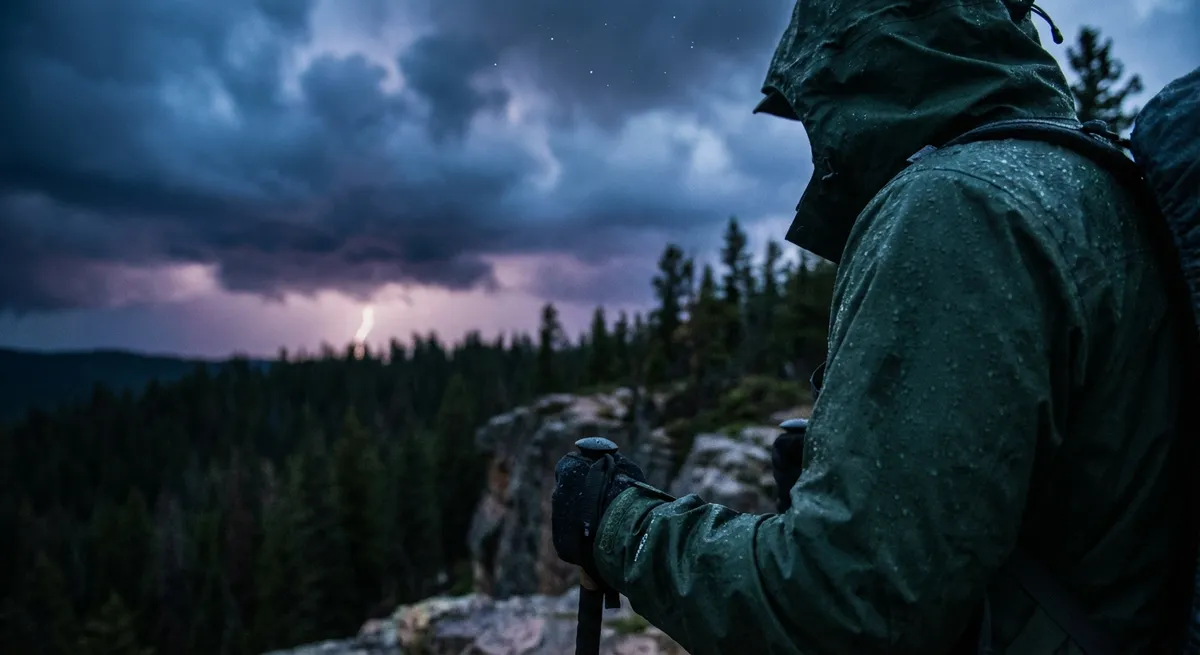
There’s a moment on every true adventure when the map stops being the main character and your instincts take over. It might be the first crunch of snow under borrowed crampons, the soft give of rainforest mud around your boots, or the way a desert highway hums under your tires at sunrise. Adventure travel isn’t about ticking off countries; it’s about collecting scenes so vivid you can still smell them years later.
Here are five story-soaked experiences, scattered across the globe, that don’t demand perfection or fearlessness—just a willingness to show up, say yes, and let the journey shuffle your priorities a little.
1. Chasing First Light on a Volcano Ridge in Indonesia
The alarm goes off at 2:30 a.m. Somewhere on Java, a rooster is deeply confused, a motorbike whines in the distance, and the air has that chill only high-altitude tropics can pull off. You swing your legs out of bed and realize: yes, you really did sign up to hike an active volcano before sunrise.
Mount Bromo isn’t difficult in the technical sense—it’s more of a steady, sandy trudge than a climb—but it feels like stepping into another planet. Your jeep rattles up gravel roads in the dark, headlights carving tunnels through the mist. At the viewpoint near Mount Penanjakan, a quiet crowd gathers along the railing, clutching instant coffee in paper cups, trading sleep for suspense.
What makes this an unforgettable adventure isn’t just the view (though when dawn finally spills over the caldera, lighting up Bromo and its smoking crater, it looks like the earth is exhaling fire). It’s the layering of moments: the whispered jokes between strangers from four continents, the way your guide casually mentions the last time Bromo erupted, the faint smell of sulfur that rides on the wind and reminds you that this mountain is very much alive.
If you go, pack a scarf (it’s colder than you think), a headlamp, and an old bandana for the final walk along the ash rim. And leave space in your schedule after sunrise; the real magic sometimes happens afterward, when the crowds retreat and a quiet, smoky lunar landscape belongs briefly to you and the low rumble beneath your boots.
2. Learning the Pace of the Amazon from a River That Never Rushes
Adventure in movies is all cliffs and close calls. In the Amazon, it’s quieter: a slow, wide river carrying entire forests of reflection, a canoe gliding through flooded trees, and the soft slap of paddle against water in the half-light before dawn.
You arrive expecting constant adrenaline. Instead, the rainforest hands you a different kind of intensity—one that asks you to pay attention. The guide points to what looks like a leaf and casually names a poison dart frog. A branch “moves” and becomes a tree boa. A low growl in the distance turns out to be howler monkeys warming up for the day.
A night walk through the jungle is where this trip tips fully into adventure. Your headlamp slices thin beams through layers of foliage, catching the gleam of spider eyes and the slow, deliberate movements of a tarantula on the path. Every step is a negotiation: mud or roots, log or puddle, courage or comfort. You haven’t felt this alert since childhood, when every backyard was uncharted territory.
To do this responsibly, choose a locally run lodge that supports Indigenous communities and follows strict environmental guidelines. The Amazon is as fragile as it is vast, and adventure here comes with a responsibility: to tread lightly, listen more than you speak, and understand that for millions of people, this is not a playground—it’s home.
Pack a dry bag, lightweight long sleeves (the mosquitos are relentless but beatable), and an actual notebook. Phones feel timelessly out of place when the jungle’s own soundtrack—rain on leaves, frog choirs, night birds—doesn’t need a filter or a playlist.
3. Following the Call of Glaciers on Iceland’s Hidden Trails
In Iceland, the landscape doesn’t just sit there—it performs. Waterfalls hurl themselves off cliffs, steam erupts from cracks in the ground, and skies shift from innocent blue to storm bruised in minutes. Somewhere between the tourist-famous Golden Circle and the country’s quieter interior is where your adventure begins.
You lace up your boots on a gravel parking lot facing a wall of ice: a glacier tongue, blue-white and scarred with ancient dirt. A guide checks your crampons, cracks a joke that makes you slightly more nervous about crevasses than before, and leads the way onto the frozen river that’s been sliding toward the sea longer than your entire family line has existed.
The first steps are tentative. Crampons bite into the ice with a sound somewhere between glass breaking and velcro. Soon you’re weaving between deep blue moulins—water-carved shafts that seem to descend into another world—learning how glaciers move, melt, and carry the history of the climate etched in their layers. You’re not just walking on ice; you’re walking on time.
Layer this with a day on Iceland’s lesser-known highland trails—places only reachable in summer and often only by rugged buses or 4x4s. You ford shallow rivers barefoot, boots tied around your neck, cursing the cold and then laughing at how alive it makes you feel. The reward is a hot spring hidden in a steaming valley, where you slide into 40-degree water while sheep watch from the hills like mildly interested spectators.
Adventure in Iceland demands respect: for the weather (always changing), for the terrain (unforgiving if you’re unprepared), and for your own limits. But it also rewards curiosity. Check local forecasts obsessively, never step onto a glacier without a certified guide, and remember that the most memorable moments often happen on the way back to the car, when the storm finally breaks and the whole valley glows.
4. Long Roads, Small Villages, and the Slow Surprise of the Balkans
Not all adventure involves climbing or paddling; sometimes it’s a question of how many borders you’re willing to cross on two wheels and a vague plan. The Balkans—stretching from Croatia’s coastline through Bosnia and Herzegovina, Montenegro, and beyond—are made for the kind of trip where each border stamp feels like turning a page in a very complicated, very beautiful book.
You start in a medieval walled city by the Adriatic, where laundry still hangs across alleyways like low-flying flags. A rented motorbike or small car becomes your constant companion. The rules of the road shift as mountains close in and highways melt into narrow switchbacks carved into limestone cliffs.
Some days, your adventure is a single, endless road that snakes around a turquoise river so clear you can see white stones on the bottom from a moving vehicle. Other days, it’s the unexpected: a roadside stall selling honey and rakija, an invitation from a stranger to try home-cooked pita, or an improvised sign pointing toward a waterfall that looks like it belongs in a fantasy novel.
The region’s history—layered, painful, and still healing—sits very close to the surface. In Sarajevo, the sidewalks hold faint “roses” of red resin filling shell craters. In Mostar, locals leap from a centuries-old bridge into the Neretva River, a tradition that feels like defiance and celebration in equal measure. Adventure here is as much emotional as physical; it asks you to listen to stories that don’t fit neatly into travel brochures.
Research border requirements and road conditions in advance, carry a bit of local currency for each country, and learn a few words in Bosnian/Croatian/Serbian: hvala (thank you), molim (please), and kafa (coffee) will get you further than you think. And plan for “lost” hours—you’ll want them when a viewpoint or village market refuses to let you rush onward.
5. Sand, Silence, and Starlight in the Moroccan Sahara
The last real road ends at a dusty frontier town, where everyone seems to be either arriving from or heading into the desert. From there, the Sahara begins—not as an instant sea of dunes, but as a gradual shift from scrub to sand, from buildings to tents, from noise to a hum you can feel more than hear.
You meet your camel—a patient, long-lashed creature whose name the handler translates as “Storm” or “Coffee” or “Troublemaker,” depending on his mood. As the sun slides lower, your small caravan moves out across the dunes. The town shrinks behind you. The sand turns from gold to copper to a deep, impossible blue at the edges.
Adventure here isn’t about speed. It’s about rhythm: the sway of the saddle, the crunch of hooves, the wind combing patterns into every dune. By the time you arrive at a desert camp, darkness is close. Lanterns flicker to life. Tajine appears from a kitchen you swear didn’t exist five minutes ago. And then the real show begins—above you.
The Milky Way isn’t a concept or a backdrop out here; it’s a river of light running across the sky. You lie back on cooling sand, feeling grains slip through your fingers, and realize how seldom you’ve seen the night this clearly. Drums start by the fire. Stories in three languages braid themselves around you. This is luxury at its most elemental: warmth, food, community, and the infinite ceiling of the universe.
Desert adventure requires caution. Travel with a reputable operator that respects local Berber communities, avoid the hottest months if you’re sensitive to extreme heat, and keep a scarf handy for sand-laden wind. Bring a reusable water bottle, a power bank (there may be limited electricity), and a willingness to put your phone down and let the darkness reset your sense of scale.
Conclusion
Adventure trips don’t always look like the posters. Sometimes they’re quiet: a sunrise shared with strangers on a volcano rim, a single frog hidden in an acre of rainforest, a frozen step on a glacier that rearranges your sense of time. Sometimes they’re loud: motorbikes echoing through mountain passes, drums in a desert camp, storms exploding over Icelandic valleys.
What they have in common isn’t danger or distance—it’s a shift. You leave home one person and return with pockets full of moments you can’t quite explain but will think about for years. The road, the river, the ice, the dunes—they all have their own ways of editing your story.
Choose your next trip not by how impressive it sounds, but by how alive it makes you feel in the imagining. The rest—the missed turns, the muddy boots, the unexpected conversations under unfamiliar stars—will take care of themselves.
Sources
- U.S. National Park Service – Glacier Safety - Background on safe glacier travel and why guided trips and proper gear matter
- UNESCO World Heritage Centre – Cultural and Natural Sites in the Balkans - Overview of significant cultural and natural destinations in Croatia and the broader Balkan region
- Icelandic Meteorological Office - Reliable information on Iceland’s rapidly changing weather and volcanic activity, essential for planning outdoor adventures
- Brazilian Ministry of Tourism – Amazon Region - Official information on visiting Brazil’s Amazon region and guidance on sustainable tourism
- Moroccan National Tourist Office - Practical travel details and safety considerations for trips into the Moroccan Sahara and surrounding desert regions