
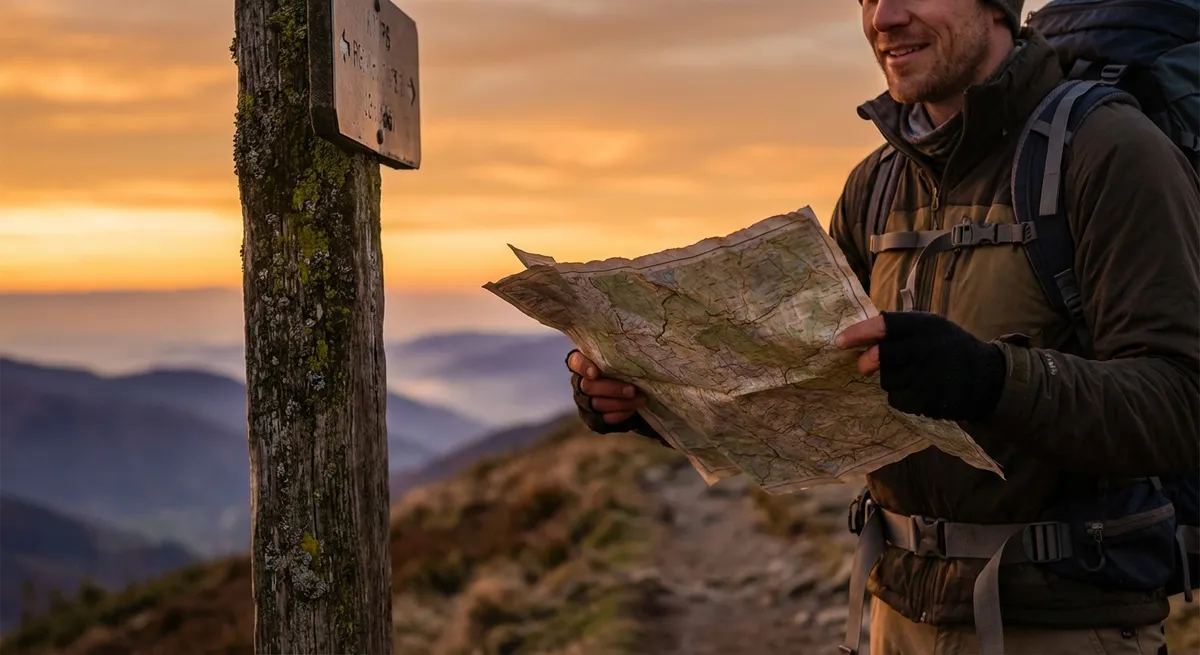
There’s a moment—right before a trip becomes real—when your cursor hovers over the “book now” button and your heart races faster than your brain can keep up. That’s the spark this story lives in. These aren’t just adventure trips you log in miles or elevation; they’re the kind that rearrange your sense of distance, time, and who you are when no one knows your name. Step into five journeys that unfold like chapters—each with its own rhythm, risk, and quiet revelation.
When The Desert Starts Talking: A Silent Crossing in Wadi Rum
The first thing you notice in Wadi Rum isn’t the heat. It’s the sound—or the lack of it. The Jordanian desert seems to hold its breath as your jeep grinds to a stop and the engine clicks into silence. Sand stretches out like an ocean paused mid‑wave, and sandstone towers glow the color of embers.
You sling your backpack over your shoulder and follow your Bedouin guide away from the 4x4 tracks, feet sinking an inch with every step. It’s not a trek in the mountaineering sense; it’s slower, more deliberate. The desert doesn’t hurry. Even the shadows move on their own schedule.
By late afternoon, you’re climbing a rock bridge, palms chalky with sandstone dust. From the top, the valley looks like another planet—no roads, no fences, just contour lines written by wind. Adventure here isn’t about conquering anything; it’s about how much of your noise you’re willing to put down.
Night drops quickly. A fire crackles, bread bakes under the coals, and stars arrive in impossible numbers. The Milky Way looks so bright it might drip. You realize you haven’t checked your phone in hours because, for once, you don’t need another window to the world. You’re standing in one.
Tip for this kind of trip: choose operators who work with local Bedouin communities, keep group sizes small, and build in at least one night of wild camping under the stars instead of staying only in fixed camps.
Mist, Macaws, and Mud: Following the River Through the Amazon
Adventure doesn’t always begin with a dramatic arrival. Sometimes it starts with a humidity so thick it feels like someone draped a wet towel over the sky. From the small boat pushing up an Amazon tributary, the jungle is a wall: layered greens, tangled roots, flashes of color that might be birds or your imagination.
You step onto a narrow boardwalk, then onto the forest floor, and suddenly every sense has a job. The ground is soft, half‑memory and half‑leaf. The air tastes like wet bark. Somewhere above, a howler monkey starts up—a low, echoing roar that sounds like a lost engine.
The path isn’t hard in the “technical” sense, but it demands your full attention. Mud grabs your boots like it’s trying to edit your speed. Ant columns cross with single‑minded purpose. Your guide pauses, raises a hand, and you hear it: the slow flap of macaw wings overhead, the staccato call of something unseen moving through the canopy.
Adventure here is about scale—of ecosystems, of patience, of how small you feel when standing beneath a tree that was old before your country existed. At the river’s edge that evening, bioluminescent eyes glitter just above the surface. Caiman. The jungle doesn’t sleep; it shifts.
What changes you isn’t the Instagram shot from the lodge deck. It’s the moment you realize the forest is a living, interdependent system, and you’re the most temporary thing in it. You leave with mud still on your boots and a new respect for words like “biodiversity” that used to live only in headlines and documentaries.
Tip for this kind of trip: look for lodges or tours that support conservation research, limit group size, and avoid animal‑handling experiences. The best encounters keep a respectful distance.
Bicycles, Fjords, and the Long Light of a Nordic Summer
On a narrow coastal road in Norway, there’s a point where the mountains dive straight into the sea and the sky forgets how to turn dark. You’re pedaling along the edge of a fjord, tires humming, cool air threading through your jacket. The clock says late evening; the light insists it’s afternoon.
Cycling here feels almost unfair. Ferries connect islands like moving bridges, tunnels burrow under mountains, and every bend unfurls another postcard: red boathouses, waterfalls spilling out of nowhere, snow patches clinging to high ledges in July.
The climbs are real—legs burning, lungs reminding you that “gradual incline” is a polite lie—but they’re punctuated with small moments: a bakery in a village barely big enough for a street, locals sunning on smooth rocks, kids jumping into water that must be half‑melted glacier.
There’s a freedom in carrying almost everything you need on your bike: rain shell, extra layers, a thermos, a camera, and that one chocolate bar you’re pretending is “for emergencies.” You learn to read the wind, eye the clouds, and accept that sometimes the weather wins.
The payoff comes around 11 p.m., when you’re still sitting at a picnic table outside a cabin, the world drenched in golden light that refuses to quit. Mountains reflect perfectly in still water, so sharp they might be double exposures. Tired doesn’t feel like a problem; it feels like proof.
Tip for this kind of trip: plan shorter daily distances than you think you need—30–60 km can feel full when you’re stopping constantly for views, ferries, and weather changes. Prioritize layers and waterproof gear over packing lots of outfits.
Volcano Dawn: Chasing First Light Above the Clouds
There’s a specific kind of alarm that only goes off for volcano hikes. It’s the one you set for 2:30 a.m., the one you question with every fiber of your being when it actually rings. But you lace your boots in the dark anyway, step into the cold, and let your breath fog out in disbelief.
On the slopes of an active volcano—maybe in Guatemala, Indonesia, or East Africa—the world is reduced to the light cone of your headlamp and the rhythm of your steps. Gravel shifts, the incline tests your calves, and conversations taper off into silence. Every now and then you look up and see the pinpricks of other climbers’ headlamps above, like a slow‑moving constellation.
The upper air is thinner and sharper. You feel your heartbeat not just in your chest but in your ears, your fingertips, your thoughts. The horizon is still black when you reach the rim or viewpoint—and then, very quietly, color begins.
First it’s a suggestion of purple, then orange, then that delicate pink you only see when the sun is negotiating its contract with the night. Clouds spread out beneath you like an inland sea. In the distance, another volcano exhales a thin ribbon of ash. If you’re somewhere like Acatenango near Guatemala’s Fuego, you might even see a plume of glowing lava in the predawn dark.
No photo captures the exact feeling of your first volcanic sunrise. It’s part awe, part relief, part disbelief that all those small training walks around your neighborhood led to this. The descent is dusty, slippery, and filled with the giddy laughter of people who shared a mild, joyful kind of suffering in the dark.
Tip for this kind of trip: respect altitude and weather. Research routes through local guides, pack layers (including a warm hat and gloves even in “tropical” regions), and don’t cut corners on proper footwear and headlamps.
The Slow Adventure: Hut‑to‑Hut Trails in the Alps
Not all adventure has to be extreme. Some of the most quietly life‑changing trips move at the pace of your feet. In the European Alps, spiderwebs of trails link mountain huts—simple lodges where hikers trade stories over shared tables, then fall asleep to the creak of wooden bunks and the rush of distant streams.
You start in a valley town with cowbells echoing off the slopes and bakery windows full of pastries that make you reconsider your entire breakfast philosophy. The trail heads up—of course it does—and soon the village shrinks, the road ends, and the map becomes less about place names and more about contour lines.
By midday, you’re crossing meadows where wildflowers ignore borders and languages. Marmots whistle warnings from rocky outcrops. Glacier tongues glint on the peaks like old scars. Your pace finds you: slow on the steep sections, quicker on the rolling bits, always calibrating between effort and the temptation to stop and stare.
The huts themselves are small miracles of logistics: hot food, blankets, sometimes even showers, all delivered to places with no roads. You arrive sweaty, tired, maybe a bit sunburned, and within an hour you’re sipping something warm (or cold) on a balcony as the sky softens around jagged silhouettes.
Evening in a hut is its own kind of community. Guides spread maps on tables, solo travelers trade route tips with couples, and languages mix into a low, friendly hum. You go to bed early not out of obligation, but because tomorrow has another pass, another view, another honest day of moving through the world on your own power.
Tip for this kind of trip: book popular huts in advance during peak summer, carry only what you need (hut stays mean you can skip tents and stoves), and learn a few key phrases in the local language for trail etiquette and greetings.
Conclusion
Adventure trips don’t all look the same on a postcard. Some are stark deserts and endless stars; others are dense jungles, midnight sun, volcanic ash, or alpine meadows stitched together by bootprints. What they share is the way they reset your internal compass.
You come home with sore muscles, sure—but also with a quieter phone, a louder curiosity, and a slightly different answer to the question, “Where do you feel most alive?” The next time your cursor hovers over that “book now” button, remember: it’s not just a trip you’re choosing. It’s the next story you’ll tell about who you became when the map finally faded and the real journey started.
Sources
- UNESCO World Heritage Centre – Wadi Rum Protected Area - Background on the cultural and natural significance of Jordan’s Wadi Rum desert
- World Wildlife Fund – Amazon Rainforest - Overview of Amazon biodiversity, conservation challenges, and why responsible tourism matters
- Visit Norway – Cycling in Fjord Norway - Practical information and routes for cycling adventures around Norwegian fjords
- Guatemala Tourism Board – Acatenango Volcano - Official details on one of Central America’s best‑known volcano treks
- Swiss Alpine Club – Mountain Huts - Information on hut‑to‑hut hiking infrastructure and planning in the Alps