
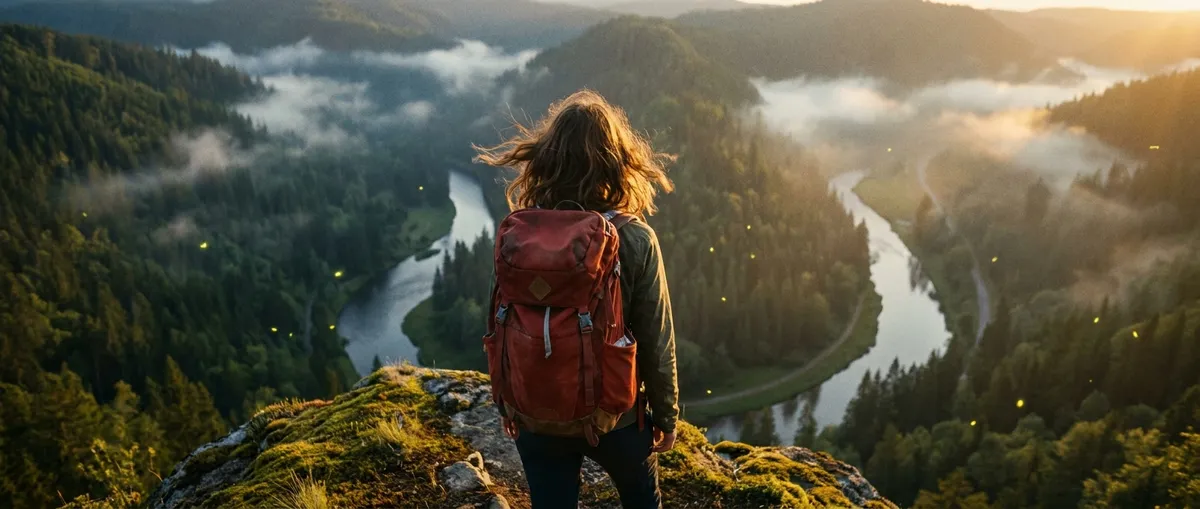
Some trips feel like a checklist. Others feel like a turning point. The true adventures rarely arrive with a red pin on a map—they sneak up on you in the sound of gravel under your boots, in the way the air tastes before a storm, in the strangers who briefly share your path. This isn’t about conquering peaks or chasing adrenaline for the highlight reel. It’s about those off‑beat journeys where the world gets bigger and your life gets quieter, all at once.
Below are five adventure experiences and destinations—part story, part guide—that invite you to step just outside your comfort zone, without falling off the edge of the world.
Dawn on the Glacier Lagoon: Learning to Listen to Ice
The night before the kayak trip, the lagoon sounded almost imaginary—like someone shaking glass in a faraway room. Wind scratched at the tent, and every now and then, a low thunder rolled across the water. “It’s only ice breaking,” the guide had said, like that was a normal sentence.
At 4:30 a.m., the horizon was already blushing with pale light as you slid the kayak into the black, glassy water. Icebergs, blue as old bruises and white as torn paper, floated around you. Some were the size of cars. Some, the size of houses. Each one was the remains of something older than every story you’d ever heard.
You dip the paddle in. The lagoon is so calm that every stroke feels like you’re drawing on a mirror. Then, it happens. Off in the distance, a chunk of glacier shears away and crashes into the water. The sound travels through your chest before it reaches your ears. Ripples spread, rocking the ice, rocking your kayak, nudging you into the realization that the planet is not a backdrop; it’s a living thing that breathes and breaks and changes.
Adventure Tip: Glacier lagoons in places like Iceland, Alaska, and Patagonia offer guided sunrise or sunset paddles. Go early in the season or shoulder months when crowds are thinner. Layer up—waterproof over warmth—and bring a dry bag for your camera. Most importantly, choose an operator that emphasizes safety and environmental respect; they’ll keep you at a safe distance from unstable ice while still letting you feel the scale and hush of the place.
The Night Train Pact: Crossing a Country While Everyone Sleeps
You board the overnight train with a backpack, a cheap ticket, and a quiet hope that your bunkmate doesn’t snore. The compartment door slides shut, and suddenly you’re folded into a rolling, temporary home with strangers who have nowhere else to be—and nothing else to do—but talk, read, and drift.
Outside the window: fields, then factories, then shadowy clusters of houses with a single yellow light still on. Inside: the rustle of snack wrappers, the metallic clink of a tea spoon from the samovar cart, the soft choreography of people trying to undress in a space designed for luggage, not limbs.
Around midnight, someone pulls out a worn deck of cards. Language barriers fall faster than the miles under the wheels. A student explains, with gestures and laughter, how the local card game works. A grandmother offers cookies from a tin. Someone shares the last of their instant coffee like it’s a rare vintage. The train rocks, a lullaby of steel and distance.
By dawn, before the station loudspeaker crackles into life, you’ve learned the names of cities you’ve never seen, the problems of people you’ll never meet again, and the secret superpower of long-distance trains: they make time into a shared resource instead of something everyone hoards alone.
Adventure Tip: Overnight trains in regions like Europe, India, and parts of Southeast Asia blend slow travel with genuine encounters. Choose routes that are 8–14 hours long—long enough to settle in, short enough to arrive without feeling wrecked. Pack earplugs, a light scarf (it doubles as a blanket and curtain), and slip-on shoes. For safety and comfort, keep valuables close, book a lower bunk if possible, and approach conversations with openness but also clear boundaries.
Desert Silence and the Star Lanterns: Walking Where Maps Go Blank
The first steps into the sand feel theatrical, like you’re acting out someone else’s adventure. But the desert corrects you quickly. Every dune has its own slope, every grain has its own opinion about where it wants your foot to land. You learn to walk slower, to let the sand accept your weight instead of fighting it.
By late afternoon, the light sharpens into something almost solid—shadows stretching, dunes glowing like embers. Your small group walks in a quiet line, faces wrapped in scarves, guided by someone who can read the land with the ease you read a bus schedule. The sky, once just “blue,” now has layers: a thin, bleached top, a thicker, deeper band near the horizon, a smear of dust where distant winds write their invisible stories.
At camp, the fire pops and hisses while tea boils in a blackened kettle. You eat under a sky that keeps adding stars until you lose count, until your city-trained eyes give up trying to name anything. There’s no traffic hum here, no fridge buzz, no far-off siren. Just wind, fire, and the occasional snort of a camel shifting its weight in the dark.
You realize something unsettling and comforting at once: without noise, your thoughts get loud. But give them an hour, and even they quiet down. What’s left is a kind of stillness you didn’t know you were missing.
Adventure Tip: Multi-day desert treks in places like Morocco’s Sahara, Jordan’s Wadi Rum, or Utah’s canyon country are less about extreme conditions and more about mindset. Travel in cooler seasons, hydrate constantly, and protect yourself from the sun with loose, light clothing and a wide-brimmed hat. Book with local guides—they understand the land, weather, and safety routes—and leave no trace: what you bring in, you pack out, even if the sand seems endlessly forgiving.
Forest Rain and Rope Bridges: The Canopy Walk That Rewrites “Up”
You thought forests were about trails at ground level, ferns brushing your legs and roots sneaking underfoot. That changes the minute you step onto a rope bridge suspended high in the canopy. The planks flex slightly under your feet. Below, there is a tangle of green that swallows the ground from view; above, a ceiling of leaves you’ve only ever seen from the bottom.
Rain starts without ceremony. One second the air is thick and still, the next it’s full of needle-fine drops that tap across your hood and drum on the leaves. The forest doesn’t treat the rain like an interruption. It looks… activated. Water beads on waxy surfaces, moss drinks, hidden frogs announce themselves like tiny foghorns.
Halfway across one of the bridges, you stop because a monkey stops. It stares at you from a nearby branch as if you’re the weird one here with your harness and helmet and nervous laugh. You hold eye contact for a second too long, and something shifts: this is not a theme park ride. You’re moving through someone else’s living room.
By the time you reach the last platform, your fear of heights has transformed into something else—a respect for vertical spaces, for ecosystems that stack life thirteen stories high.
Adventure Tip: Canopy walks and suspended bridges in rainforests—from Costa Rica and Peru to Malaysia and Ghana—offer access to a layer of the world most travelers never see. Choose guided tours run by conservation-focused organizations; they’ll brief you on safety, wildlife etiquette, and how your visit supports preservation. Wear grippy, closed shoes, carry a lightweight rain shell, and keep your camera on a strap. Resist the urge to shout or play music; sound carries far, and you’re a guest up there.
Ocean Thresholds: Learning to Breathe Differently Underwater
Standing on the dive boat, looking at the rolling blue expanse, your brain offers unhelpful commentary: “Humans do not belong there.” And yet, people slide off the back of the boat with uncanny calm, disappearing into the surface with a push and a splash.
When it’s your turn, the gear feels heavy and alien. The regulator tastes of rubber and salt. You shuffle to the edge, heart banging. “Hand on mask and regulator, big step forward,” the instructor says. Gravity does the rest.
Impact, bubbles, sound—then a sudden, thick quiet. Your world shrinks to the stretch of water in front of you and the smooth hiss of your breath in your ears. In. Out. In. Out. Each exhale draws a stream of silver bubbles that rise like ideas you no longer need.
The first time a sea turtle glides past, everything else—the worries you brought from land, the list of emails you still haven’t answered, the argument you replayed on the plane—falls away. Here, there is only buoyancy, light fanning down through the water, and the slow, unbothered movements of creatures who’ve never seen a calendar.
Back on the boat, hair wild, wetsuit half-peeled, you realize that adventure doesn’t always mean going harder. Sometimes it means learning a different rhythm of breathing and discovering that your nervous system has more settings than “rush” and “scroll.”
Adventure Tip: Snorkeling and beginner scuba dives in protected marine areas—such as coral reefs in the Caribbean, the Red Sea, Southeast Asia, or the Great Barrier Reef—are accessible even if you’re not an athlete. Always dive or snorkel with certified, reputable operators who prioritize reef-safe practices. Take a basic swimming test seriously; comfort in water matters more than bravado. Use reef-safe sunscreen, never touch coral or wildlife, and stay aware of currents. If full scuba feels like too much, guided snorkeling can still unlock a whole underwater universe.
Conclusion
Adventure isn’t a trophy; it’s a conversation—with ice that remembers centuries, with strangers on midnight trains, with deserts that strip life down to essentials, with forests built in layers, and with oceans that ask you to trust your own breath.
You don’t have to quit your job or circle the globe to find it. You only have to choose a journey that unsettles you just enough to make you pay attention. The goal isn’t to come back with proof. The goal is to come back different—quieter in some ways, braver in others, with a few more places in the world that feel like they’re still walking beside you long after you’ve left.
When you’re ready, pick one threshold—glacier, train, desert, canopy, sea—and step over it. The story that follows will be yours to tell.
Sources
- National Park Service – Safety in Glacier Environments – Practical guidance on staying safe around glaciers and icy waters
- Seat61 – Guide to Overnight Trains – Detailed information on night train routes, classes, and tips worldwide
- UNESCO World Heritage Centre – Wadi Rum Protected Area – Overview of a major desert trekking region and its cultural/natural significance
- Smithsonian Magazine – The Hidden Life of Tropical Rainforests – Insight into rainforest ecosystems and why canopy-level access matters
- NOAA – Coral Reef Conservation Program – Information on responsible reef tourism and protecting marine ecosystems