
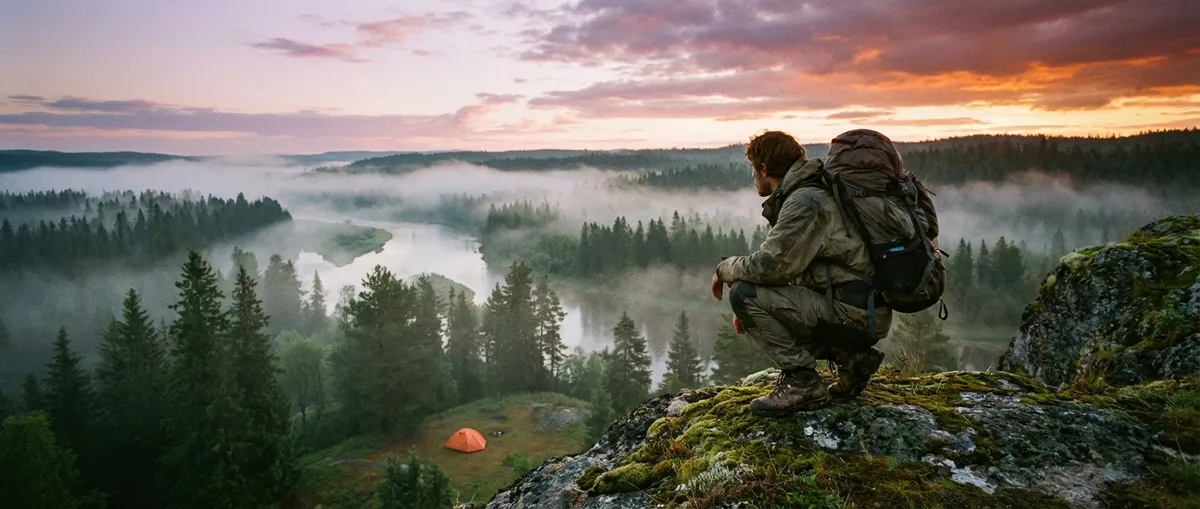
The map was wrong about one thing: it didn’t warn me that the world can tilt in an instant—one second you’re staring at a blue line on a screen, the next you’re clinging to a cliffside ledge watching a storm roll in across a foreign valley. Adventure isn’t just about the adrenaline spikes; it’s about the small, unexpected details that sneak into your memory and never leave. These five journeys are less about checking boxes and more about stepping into stories—ones you might just decide to write yourself.
Trading Footsteps for Silence in a Himalayan Village
The night bus dropped me off on what felt like the edge of the world—a dusty road, a hint of woodsmoke in the air, and the faint outline of the Himalayas turning pale gold in the sunrise. I had come for the mountains, but it was the silence that hooked me first. Not an empty silence, but a layered one: cowbells from a distant hillside, a rooster that hadn’t learned the concept of “too early,” and the low murmur of a river somewhere below.
The trail began behind a small tea stall, where the owner pressed a steaming cup into my hands and simply said, “Slow.” It turned out to be the best trekking advice I’ve ever received. As I climbed through terraced fields, kids in bright school uniforms waved and shouted “Hello!” with the conviction of diplomats. A grandmother in a red shawl adjusted her basket and overtook me on the steepest section, laughing gently as she passed.
By midday, the peaks came into view—white, jagged, indifferent to my awe. The air felt thinner but cleaner, as if every breath contained an extra dose of reality. That night, in a stone guesthouse with creaky wooden floors, the stars looked close enough to negotiate with. The generator shut off at ten, plunging everything into velvet black, but I lay awake, listening to the tick of the cooling metal roof and the rustle of someone moving quietly downstairs.
Adventure here wasn’t a summit photo; it was the rhythm of village life folding me in for a brief moment. If you go, pack less than you think you need, walk slower than you think you should, and leave more time than your spreadsheet allows. Mountains are patient. You should be too.
Getting Lost on Purpose in a Desert of Moving Sand
The desert didn’t look real from the highway—just a flat blur of beige heat. But an hour later, standing at the edge of a sea of dunes, I understood why nomads talk about sand like it’s alive. The wind was busy sculpting everything, erasing footprints almost as soon as we made them. The guide smiled when I asked about a “trail.” He pointed to the horizon and said, “We follow the light, not the line.”
We started walking as the sun dipped low, the sand turning from bone-white to amber to deep rust. Each step was a negotiation; the dune gave way underfoot, demanding twice the effort of normal walking. My calves burned, my water bottle sloshed half-empty, and yet there was a wild freedom in realizing there was no path except the one we were drawing with our feet.
By the time we reached camp—just a circle of low tents and a flicker of fire—the sky had erupted into a galaxy show. There were no city lights to dull it, no buildings to block it. I lay on my back in the cooling sand and watched satellites stitch slow lines across the darkness, feeling impossibly small and strangely okay with it.
The tips here are simple but non-negotiable: hydrate more than you think you need, protect your skin like you’re a fragile artifact, and listen to the people who call this place home. They read the sky, the dunes, and the wind like a book. The adventure isn’t riding a camel for a photo; it’s letting the scale of the desert recalibrate what you consider “big” in your life.
Chasing Rivers and Rain in a Tropical Jungle
You can hear a jungle long before you can see it. On the first humid morning of the trek, the forest sounded like a radio stuck between stations—birdcalls, insect buzz, something heavy moving in the underbrush. The air felt like warm breath on my skin. Every leaf glowed an almost cartoonish green, glistening from a recent burst of rain.
Our guide moved quickly but attentively, machete occasionally clearing a path, eyes scanning for everything at once: snakes, unstable ground, the first glimpse of the river we were meant to follow. As the canopy thickened, the light dimmed into a green twilight. My clothes were soaked from the inside out, sweat and mist indistinguishable. “You don’t stay dry here,” the guide said with a grin. “You just learn which kind of wet you prefer.”
The river when we found it was brown and muscular, dragging branches and foam along its surface. We followed it upstream, scrambling over slick rocks, ducking under vines, shoes filling with water. At a bend shaded by overhanging roots, the current slowed, forming a deep, glassy pool. We dropped our packs, waded in, and let the river strip away the heat and noise.
That night, in a simple riverside hut wrapped in mosquito nets, the rain started. Not the polite drizzle I knew from home, but a full-throated, roof-rattling deluge. It went on for hours, drumming on metal, gurgling off eaves, turning footpaths into temporary streams. I fell asleep to it, feeling the whole forest breathe.
For this kind of adventure, embrace discomfort as part of the ticket price. Invest in good footwear with grip, genuinely waterproof protection for your gear, and a healthy respect for local knowledge about weather and wildlife. The jungle doesn’t negotiate; it simply is. Your role is to move through it carefully and leave as little trace as possible.
Finding Edge and Ease on a Coastal Clifftop Trail
Some adventures come with a harness and helmet. This one came with a trail that flirted dangerously close to the edge. The coastal path wound along cliffs that dropped straight into frothing blue water, each bend revealing a fresh postcard: sea stacks battling waves, coves of impossible turquoise, gulls riding invisible thermals like lazy kites.
The wind was constant, pushing at my back, then tugging at my hat, then suddenly vanishing around a sheltered bend. Portions of the trail narrowed to a strip between cliff and thorny brush; other stretches opened onto grassy headlands where wildflowers swayed obliviously to the drama below. A sign warned, “Stay on the path. Cliffs are unstable.” I believed it instantly—the land itself looked mid-negotiation with gravity.
At one lookout, I sat on a flat rock and watched the ocean pound the base of the cliffs, sending up spray that caught the sun in brief rainbows. Far off, a fishing boat bobbed, impossibly small. I ate a flattened sandwich that somehow tasted like the best meal of my life. It’s funny how views can season food better than any spice.
Coastal trails teach a particular kind of balance: you feel both exposed and deeply grounded. The trick is in preparation—solid shoes, layers for fickle wind, and a stubborn respect for signs and weather reports. It’s tempting to lean closer for the perfect photo or wander off for a better angle, but on these edges, caution is its own kind of courage.
Night Wheels and Hidden Roads in a Mountain Pass
Adventure doesn’t always require leaving the road; sometimes it’s about choosing the right ones. The mountain pass had looked like a harmless squiggle on the map. In person, at night, it revealed itself as a tight series of switchbacks carved into darkness. My headlights caught only flashes: a guardrail, a road sign, a glimpse of empty air to the right that hinted at a drop I preferred not to measure.
As we climbed, fog slipped in between the pines like slow smoke. Music played low on the radio, but no one in the car spoke much; all attention was on the next curve, the next oncoming set of lights, the next hairpin turn that made our stomachs float. There was something intensely alive about it, the careful dance between machine, mountain, and mind.
At the top, we pulled into a tiny turnout that wasn’t much more than a wide shoulder and turned off the engine. The sudden quiet was jarring. The fog had thinned here, revealing a valley below peppered with town lights, each cluster its own little universe. A shooting star scribbled across the sky more quickly than I could form a wish. The road that had felt so intense a few minutes before now lay behind us, just another line on a map.
For road-based adventures, romance should always ride shotgun with realism. Check weather and road conditions obsessively, keep your vehicle serviced and fueled, and respect your own limits—rest when you’re tired, turn back when things feel off. There’s no shame in choosing safety over swagger. The best stories are the ones you’re still around to tell.
Conclusion
Adventure isn’t a single, dramatic moment; it’s a series of choices—some bold, some small—that nudge you beyond the comfortable borders of your routine. It’s the tea stall before the mountain trail, the first step into hot sand, the dripping boots by a jungle river, the decision to stay behind the cliffside warning sign, the quiet turnout at the top of a mountain pass.
You don’t have to chase extremes to live a story worth sharing. You just have to say yes a little more often—to the early bus, the strange-sounding trail, the road that winds a bit higher than you’d planned. Somewhere out there, a view, a conversation, or a moment of stillness is waiting to surprise you. When it does, let it.
Sources
- U.S. National Park Service – Hiking Safety - Practical guidance on preparing for hikes and treks in varied terrain
- Centers for Disease Control and Prevention – Travelers’ Health - Up-to-date advice on health, vaccines, and safety for international travel
- Leave No Trace Center for Outdoor Ethics - Framework for minimizing your impact while exploring wild places
- UNESCO World Heritage Centre – Natural Sites - Overview of significant natural landscapes and protected areas around the world
- American Alpine Club – Mountain Safety Resources - Articles and resources on safe travel in mountainous and high-altitude environments